Fundamental Analysis: What It Is & How to Value Companies
Imagine this situation. You see a stock being discussed everywhere—on social media, in WhatsApp groups, on business news channels. The price has already doubled in a short time. Everyone says, “This will go much higher.” You feel the fear of missing out and consider buying it immediately.
A few months later, the stock crashes because profits were weak, debt was high, or the business model itself was fragile. Many investors experience this at least once. What separates those who learn from this mistake and those who repeat it is fundamental analysis.
Fundamental analysis exists to answer one critical question before you invest your hard-earned money: Is this company truly worth owning for the long term, or does the stock price hide serious risks?
Instead of focusing on short-term price movements or market noise, fundamental analysis looks deeper—at the business itself. It helps investors identify companies with real strength and avoid those that only look attractive on the surface.
At its core, fundamental analysis is the process of evaluating a company’s financial health, business model, competitive position, and future growth potential to estimate its intrinsic value—what the business is genuinely worth.
This intrinsic value is then compared with the current market price. If the market price is much lower, the stock may be undervalued. If it is far higher, the stock may carry hidden risks, regardless of how popular it appears.
This approach transforms investing from speculation into informed decision-making. It allows investors to stay calm during market volatility because their confidence comes from understanding the business, not guessing price movements.
When markets fall, fundamental analysis helps distinguish between temporary price declines and real deterioration in business quality.

This guide is designed to serve three types of learners. If you are a beginner, it will build your foundation step by step without assuming prior financial knowledge. If you are an intermediate investor, it will help refine your analysis process and avoid common mistakes.
And if you are a serious learner, it will introduce professional-level concepts used by experienced investors to evaluate businesses deeply and consistently.
By the end of this guide, you should be able to confidently answer the most important investing question: How do I know if a stock is truly worth buying and holding for the long term?
Table of Contents
What Is Fundamental Analysis and Why Does It Matter?
Fundamental analysis is a method of evaluating stocks by studying the real business behind the share price.
Instead of asking, “Where will the price go tomorrow?”, it asks a more important and practical question: What is this company actually worth, and is the current price justified?
This approach helps investors separate strong businesses from weak ones and long-term opportunities from short-term hype.
Understanding Intrinsic Value vs. Market Price
At the heart of fundamental analysis lies the concept of intrinsic value. Intrinsic value represents what a company is genuinely worth based on its fundamentals—such as revenues, profits, cash flows, assets, debt levels, growth prospects, and competitive strength. It is independent of market emotions, news headlines, or temporary trends.
The market price, on the other hand, is simply the price at which buyers and sellers agree to trade the stock at a given moment. This price is often influenced by fear, greed, speculation, or incomplete information. As a result, market price and intrinsic value frequently diverge.
For example, imagine a stock trading at $50 per share. After analyzing the company’s financial statements, growth potential, and business stability, you estimate that the business is actually worth $75 per share. This gap suggests the stock may be undervalued.
Fundamental analysis helps investors identify such situations, where patience and understanding can be rewarded when the price eventually moves closer to value. The opposite is also true—stocks can trade far above their intrinsic value, carrying hidden risks despite strong popularity.
The Core Objective: Long-Term Wealth Creation
Fundamental analysis is fundamentally different from speculation or gambling. Speculation relies on predicting short-term price movements, often without understanding the underlying business. Fundamental analysis focuses on business quality and sustainability.
By understanding how a company earns money, how stable its profits are, and how well it can grow over time, investors build conviction. This conviction is crucial during market volatility.
When prices fall due to temporary fear or broader market corrections, investors who understand a company’s fundamentals are less likely to panic. They can distinguish between a falling stock price and a deteriorating business, which helps them avoid emotional decisions and stay invested through short-term noise.
Over long periods, wealth is created not by frequent trading, but by owning quality businesses that grow earnings and cash flows consistently.
Who Uses Fundamental Analysis and Why
Fundamental analysis is used by a wide range of market participants. Value investors, such as Warren Buffett, rely on it to find high-quality companies trading below their intrinsic value.
Growth investors use fundamental analysis to identify businesses with expanding revenues, rising profits, and increasing market share.
Dividend investors depend on it to assess whether a company can generate stable cash flows and sustain dividend payments over many years.
Even active traders and short-term participants use fundamental analysis, not to time trades, but to filter out weak or risky companies. By focusing only on fundamentally sound businesses, they reduce the risk of unexpected collapses due to poor financial health or structural problems.
In short, fundamental analysis matters because it provides a rational, business-focused framework for making investment decisions—regardless of your investing style or time horizon.
Fundamental Analysis vs. Technical Analysis: Understanding the Difference
One of the most common questions new investors ask is whether they should use fundamental analysis or technical analysis. The truth is that these two approaches are not rivals.
They answer different questions and serve different purposes. Understanding how they differ—and how they can work together—helps investors build a more complete and disciplined investment approach.
Two Complementary Approaches to Stock Analysis
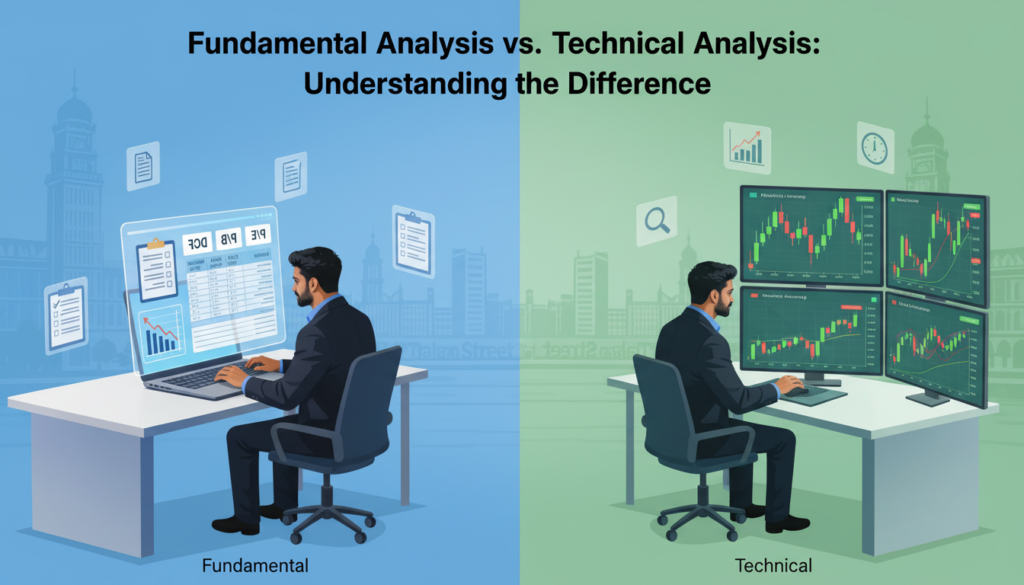
Fundamental analysis focuses on the business behind the stock. It tries to answer the question: “What should I buy?” By studying financial statements, business models, competitive advantages, and long-term growth potential, fundamental analysis helps investors decide whether a company is worth owning.
Technical analysis, in contrast, focuses on price behavior and market psychology. It answers a different question: “When should I buy or sell?” Technical analysts study price charts, trading volume, trends, and patterns to understand how market participants are behaving at a given moment.
Professional investors often use both approaches together. They may rely on fundamental analysis to identify strong, high-quality businesses and then use technical analysis to improve timing—avoiding buying during short-term market weakness or selling into extreme optimism. Used this way, fundamentals provide direction, while technicals help with execution.
Key Differences at a Glance
The two approaches differ across several important dimensions. Fundamental analysis is based on financial data and business information, such as income statements, balance sheets, cash flow statements, management quality, and industry dynamics.
Technical analysis relies primarily on price charts, volume data, and indicators derived from past market behavior.
The time horizon also differs. Fundamental analysis is typically long-term in nature, suitable for investors who plan to hold stocks for years as the business grows.
Technical analysis often focuses on shorter time frames, ranging from days to months, where price trends and momentum matter more than underlying business value.
Their assumptions are different as well. Fundamental analysis assumes that a company has an intrinsic value that can be estimated and that prices eventually move toward this value.
Technical analysis assumes that all available information is already reflected in the price, and that studying price patterns can reveal future movements.
For beginners whose goal is long-term investing, it is generally wiser to prioritize fundamental analysis first. Without understanding the business, even the best chart setup can lead to poor decisions if the underlying company is weak.
When to Use Each Approach
Fundamental analysis is best used when building core portfolio positions—stocks you intend to hold through market cycles. It helps answer whether a company deserves your capital and whether its long-term prospects justify staying invested during volatility.
Technical analysis becomes useful when you want to optimize entry and exit points. Even a great business can be a poor investment if bought at the wrong time. Technical tools can help investors avoid buying during short-term euphoria or selling during panic-driven declines.
The most effective approach for many investors is a combination of both. Fundamentals help you choose quality companies with strong long-term potential, while technical analysis helps you decide when market conditions offer a more favorable opportunity to buy or sell.
Together, they create a balanced framework that reduces emotional decision-making and improves overall investment discipline.
Fundamental Analysis vs Technical Analysis: Key Differences
The table below summarizes the key differences between fundamental and technical analysis.
| Aspect | Fundamental Analysis | Technical Analysis |
|---|---|---|
| Core Question Answered | What should I buy? | When should I buy or sell? |
| Primary Focus | Business quality and intrinsic value | Price movement and market psychology |
| Data Used | Financial statements, earnings, cash flow, balance sheet, management quality, industry analysis | Price charts, volume, indicators, patterns |
| Underlying Assumption | Every company has an intrinsic value that prices move toward over time | All available information is already reflected in price |
| Time Horizon | Long-term (years) | Short-term to medium-term (days to months) |
| Investor Type | Long-term investors, value investors, growth investors, and dividend investors | Traders, swing traders, momentum traders |
| Market Volatility Impact | Volatility is often an opportunity | Volatility is a trading signal |
| Decision Basis | Business fundamentals and sustainability | Trends, momentum, support, and resistance |
| Risk of Ignoring Business Quality | Low | High (weak companies can still look good on charts) |
| All available information is already reflected in the price | Building core portfolio holdings | Timing entries and exits |
| Suitability for Beginners | High (recommended starting point) | Medium (requires practice and discipline) |
The Two Pillars of Fundamental Analysis

Fundamental analysis rests on two equally important pillars: quantitative analysis and qualitative analysis.
Many beginners focus heavily on numbers alone, while others rely too much on stories and narratives.
In reality, strong investment decisions come from combining both. Numbers tell you what has happened, while qualitative factors help you judge whether those results can continue in the future.
Quantitative Analysis: The Numbers Story
Quantitative analysis involves evaluating measurable financial data published in a company’s reports. This data comes primarily from three core financial statements: the income statement, balance sheet, and cash flow statement.
By studying these documents, investors assess a company’s earnings, its financial stability, and its ability to efficiently convert profits into actual cash.
This form of analysis includes tracking trends in revenue growth, profit margins, debt levels, and cash flow over multiple years.
Investors also calculate financial ratios—such as return on equity, debt-to-equity, and profit margins—to compare one company with another or to evaluate how a business has evolved over time.
The strength of quantitative analysis lies in its objectivity. Numbers are standardized, verifiable, and comparable across companies and industries, which makes them a reliable foundation for analysis.
However, numbers alone have limitations. Financial statements largely reflect the past, not the future. A company may show impressive growth and strong profits today, yet face structural challenges that threaten its long-term prospects.
Accounting choices can also make performance appear better or worse than economic reality. This is why quantitative analysis, while essential, is not sufficient by itself.
Qualitative Analysis: Beyond the Numbers
Qualitative analysis focuses on non-numerical factors that significantly influence a company’s long-term success or failure. These factors cannot be neatly captured in spreadsheets, yet they often determine whether strong financial performance is sustainable.
Key qualitative elements include management quality and integrity, the sustainability of the business model, and the company’s competitive advantages, often called economic moats.
A business with a trusted brand, loyal customers, high switching costs, or cost leadership can defend its profitability even in competitive markets.
Industry dynamics, regulatory environment, and corporate governance standards also play a critical role, especially in markets where regulations or promoter behavior strongly impact outcomes.
History shows that strong leadership can transform average businesses into long-term winners, while weak governance or unethical practices can destroy even financially attractive companies.
Many corporate failures occurred not because the numbers looked bad initially, but because warning signs in management behavior or governance were ignored.
Qualitative analysis helps investors judge whether today’s good numbers are likely to persist tomorrow. It adds context, depth, and realism to financial data.
When combined with quantitative analysis, it creates a complete picture—one that looks beyond past performance and focuses on the durability and quality of the underlying business.
The Three-Level Approach to Fundamental Analysis
Investors do not all analyze stocks in the same way. Some start by looking at the economy, others begin with individual businesses, and many use a mix of both.
These approaches are commonly described as top-down, bottom-up, and hybrid. Understanding how each works helps you choose a method that fits your investing mindset and avoids random or inconsistent decisions.
Top-Down Analysis: Starting with the Big Picture
Top-down analysis begins with the overall economy and gradually narrows down to industries and individual companies.
Investors using this approach first analyze macroeconomic indicators such as GDP growth rates, interest rate trends, inflation levels, unemployment data, currency movements, and global or geopolitical developments.
The goal is to understand where the economy is in the business cycle and how that environment may influence different sectors.
Economic cycles tend to favor certain industries at different times. For example, periods of economic expansion often benefit sectors linked to consumer spending and business investment, while slowing growth or rising interest rates may favor defensive sectors that provide essential goods and services.
By identifying these trends early, top-down investors try to align their stock selections with favorable macro conditions.
This approach works best for investors who pay close attention to economic indicators or are concerned about market timing and sector rotation. It helps reduce exposure to industries likely to struggle in the current or upcoming phase of the economic cycle. However, its limitation is that strong macro views do not always translate into successful company-level investments, which is why further analysis is essential.
Bottom-Up Analysis: Company-First Perspective
Bottom-up analysis takes the opposite approach. Instead of starting with the economy, it begins with individual companies, largely ignoring short-term macroeconomic conditions. Investors using this method focus on identifying exceptional businesses that are trading at reasonable prices, regardless of broader economic trends.
This approach emphasizes company-specific factors such as unique products or services, strong and ethical management, consistent earnings growth, healthy balance sheets, and sustainable competitive advantages. The underlying belief is that truly great businesses can perform well across different economic cycles because their long-term success depends more on business quality than temporary economic conditions.
Bottom-up analysis is commonly favored by value and long-term investors. It assumes that while markets and economies fluctuate, companies with strong fundamentals, loyal customers, and durable moats will continue to grow and create shareholder value over time. The challenge lies in maintaining patience, as short-term market movements may not immediately reflect the company’s true strength.
Hybrid Approach: Combining Both Perspectives
The hybrid approach combines the strengths of both top-down and bottom-up analysis. It acknowledges that company quality and economic conditions both matter, and that ignoring either can lead to incomplete decisions.
In practice, this approach often starts with screening for fundamentally strong companies—those with solid financials, capable management, and clear competitive advantages. Once a shortlist is created, investors then consider macroeconomic and industry factors to refine their decisions. This might include favoring companies operating in industries with positive long-term demand trends or avoiding sectors facing strong regulatory or economic headwinds.
The hybrid approach is pragmatic and flexible. It allows investors to stay focused on high-quality businesses while remaining aware of broader risks and opportunities. For many long-term investors, this balanced method provides a disciplined framework that reduces blind spots and leads to more consistent, well-reasoned investment decisions.
Understanding Financial Statements: The Foundation
Financial statements form the backbone of fundamental analysis. They provide structured, standardized information about a company’s financial condition, performance, and cash generation. Learning to read these statements is like learning the language of business. Once you understand them, you can move beyond headlines and opinions and evaluate companies based on facts.
The Balance Sheet: A Snapshot of Financial Health
The balance sheet shows what a company owns and what it owes at a specific point in time. The difference between the two belongs to shareholders and is called shareholder equity. In simple terms, it answers the question: How financially strong is this company right now?
Assets are what the company owns. These include current assets such as cash, bank balances, inventory, and receivables that are expected to be converted into cash within a year, and fixed or long-term assets like factories, machinery, land, and equipment. Liabilities represent what the company owes. Current liabilities include short-term obligations like payables and short-term borrowings, while long-term debt consists of loans and obligations due over many years.
A simple way to understand a balance sheet is to think of your personal finances. Your house, car, and bank balance are assets. Your home loan and credit card dues are liabilities. Whatever remains after subtracting liabilities from assets is your net worth. Shareholder equity works the same way for a company.
Investors use the balance sheet to assess financial stability. Ratios such as debt-to-equity help evaluate how much leverage a company uses, while the current ratio and working capital indicate whether the company can meet short-term obligations comfortably. A strong balance sheet provides resilience during economic downturns and gives management flexibility to invest in growth.
The Income Statement: Measuring Profitability
The income statement shows how much money a company made or lost over a specific period, usually a quarter or a year. It begins with revenue, the total sales generated by the business. From this, the cost of producing goods or services is subtracted to arrive at gross profit.
Next come operating expenses such as salaries, marketing, and administrative costs, which lead to operating profit. After accounting for interest expenses and taxes, what remains is net income, or profit attributable to shareholders.
The income statement helps investors understand profitability and efficiency. Profit margins reveal how much profit the company keeps from each unit of revenue, while earnings per share (EPS) show how profits are distributed across shares. More important than a single year’s numbers are trends over time. Consistent revenue growth combined with stable or expanding margins usually indicates a strong business. In contrast, rising revenues with shrinking margins may signal intense competition, rising costs, or weakening pricing power.
The Cash Flow Statement: Following the Money
The cash flow statement tracks actual cash moving in and out of the business, which can differ significantly from accounting profits shown on the income statement. This statement is divided into three sections: operating cash flow, investing cash flow, and financing cash flow.
Operating cash flow reflects cash generated from the company’s core business activities and is the most important section for investors. Investing cash flow shows money spent on or received from assets like equipment or acquisitions, while financing cash flow reflects borrowing, debt repayment, or dividend payments.
A key warning sign appears when a company reports profits but consistently burns cash. This may indicate aggressive accounting, poor working capital management, or an unsustainable business model. Investors also focus on free cash flow, which represents the cash left after necessary investments. This is the cash that can be used to reduce debt, pay dividends, or fund future growth.
How the Three Statements Connect
These three statements are deeply interconnected, and analyzing them in isolation can be misleading. Net income from the income statement flows into shareholder equity on the balance sheet. At the same time, adjustments to net income appear in the operating section of the cash flow statement to show how much real cash the business generated.
Consider a simple example. If a company makes a sale on credit, revenue and profit increase on the income statement, but cash does not increase immediately. The balance sheet shows higher receivables, and the cash flow statement reflects no cash inflow yet. Only when the customer pays does cash increase.
Understanding these connections helps investors detect red flags and develop a clearer picture of business reality. Together, the balance sheet, income statement, and cash flow statement form a complete financial story—one that reveals not just profits, but the quality and sustainability behind them.
Essential Financial Ratios Every Investor Should Know
Financial ratios convert raw financial statement data into meaningful insights. They help investors quickly assess profitability, financial stability, risk, and operational efficiency. While ratios are powerful tools, they must always be interpreted in context—by comparing them with industry peers and tracking trends over time rather than relying on single-year numbers.
Profitability Ratios: Is the Company Making Money?
Profitability ratios measure how effectively a company turns revenue into profit. Gross profit margin shows how much money remains after covering the direct cost of producing goods or services, revealing pricing power and cost control. Operating profit margin goes a step further by accounting for operating expenses, indicating how efficiently the core business is run. Net profit margin reflects the final profit after all expenses, interest, and taxes, showing how much the company actually earns for shareholders.
Two additional ratios assess how well management uses capital. Return on equity (ROE) measures how efficiently shareholder money is converted into profits, while return on assets (ROA) evaluates how effectively total assets generate earnings. Higher ROE and ROA generally indicate better performance, but what counts as “good” varies widely by industry.
This is why comparisons matter. Technology companies often enjoy high margins due to scalable business models, while retailers typically operate on thin margins but compensate with volume. Improving margins over time usually signal strengthening competitive position or better cost control. In contrast, shrinking margins—despite rising revenue—can indicate pricing pressure, rising costs, or intensifying competition.
Liquidity Ratios: Can the Company Pay Its Bills?
Liquidity ratios assess whether a company can meet its short-term obligations without financial stress. The current ratio compares current assets to current liabilities, providing a broad measure of short-term financial health. The quick ratio is more conservative, excluding inventory to focus on assets that can be quickly converted into cash. The cash ratio looks only at cash and cash equivalents, offering the strictest test of liquidity.
A company with very low liquidity ratios may struggle to pay suppliers, employees, or lenders during temporary disruptions. At the same time, extremely high liquidity ratios are not always positive—they may suggest idle cash or inefficient use of capital that could otherwise be invested for growth.
History shows that many companies failed not because they were unprofitable, but because they ran out of cash at the wrong time. Liquidity problems can quickly turn a healthy-looking business into a distressed one, making these ratios especially important during uncertain economic periods.
Leverage Ratios: How Much Debt Is Too Much?
Leverage ratios measure how much debt a company uses to finance its operations. Debt-to-equity compares borrowed money to shareholder capital, while debt-to-assets shows how much of the company’s assets are funded through debt. The interest coverage ratio indicates how easily a company can pay interest expenses from operating profits.
Debt can accelerate growth when used wisely, but it also increases risk. Fixed interest payments must be made regardless of business conditions. During economic downturns, revenues may fall while debt obligations remain unchanged, putting pressure on cash flows.
Acceptable debt levels vary by industry. Capital-intensive businesses such as utilities or infrastructure companies typically carry higher debt, while asset-light software or service businesses usually operate with minimal leverage. Understanding industry norms is critical before judging whether a company’s debt is manageable or dangerous.
Efficiency Ratios: How Well Is Management Using Resources?
Efficiency ratios reveal how effectively management uses assets and working capital to generate revenue. The asset turnover ratio shows how efficiently a company uses its total assets to produce sales. Inventory turnover measures how quickly inventory is sold, while receivables turnover indicates how efficiently a company collects payments from customers.
These ratios provide insight into operational discipline. Faster turnover often signals efficient processes and strong demand, while slow turnover may point to weak sales, poor inventory management, or collection issues. However, efficiency varies widely by business model. Online retailers typically turn inventory rapidly, whereas luxury goods companies may carry inventory longer without it being a negative sign.
When analyzed together, efficiency ratios help investors judge whether management is using resources wisely or tying up capital unnecessarily. Over time, improving efficiency often reflects better execution and stronger competitive positioning.
Taken as a whole, these financial ratios form a practical toolkit. Used thoughtfully and in combination with qualitative analysis, they help investors move beyond surface-level numbers and understand the true financial strength of a business.
Valuation Ratios and Methods: What Should You Pay?
Finding a good company is only half the investing job. The other half—often more important—is deciding what price to pay. Even an excellent business can become a poor investment if bought at an excessive valuation. Valuation ratios help investors translate business performance into a reasonable price framework and avoid overpaying during periods of market optimism.
Price-to-Earnings (P/E) Ratio: The Most Popular Metric
The Price-to-Earnings (P/E) ratio compares a company’s current market price with its earnings per share (EPS). In simple terms, it shows how much investors are willing to pay for each unit of earnings. A P/E of 20 means investors are paying 20 times the company’s annual earnings for the stock.
There are two common versions of this ratio. Trailing P/E uses earnings from the past twelve months and reflects what the company has already achieved. Forward P/E is based on expected future earnings and reflects market expectations about growth. Growth-oriented companies often trade at higher P/E ratios because investors expect earnings to rise rapidly, while mature or slow-growing companies usually trade at lower multiples.
A high or low P/E is not good or bad by itself. What matters is context—industry norms, growth rates, and earnings quality. A low P/E may signal undervaluation, but it can also indicate declining prospects. Similarly, a high P/E can be justified if growth is strong and sustainable. This is why the P/E ratio should never be used in isolation.
Price-to-Book (P/B) Ratio: Asset-Based Valuation
The Price-to-Book (P/B) ratio compares a stock’s market price to its book value per share, which represents the net value of a company’s assets after liabilities. This ratio is particularly useful for businesses with significant tangible assets, such as banks, insurance companies, manufacturers, and real estate firms.
In asset-heavy industries, book value provides a meaningful baseline for valuation. A P/B ratio below one may suggest that the market values the company below the worth of its net assets, while a higher ratio can indicate strong profitability or market confidence.
However, book value has limitations. For asset-light businesses—such as technology or brand-driven companies—many valuable assets like intellectual property, customer relationships, and brand strength are not fully captured on the balance sheet. In such cases, P/B can underestimate true business value and should be used cautiously.
Price-to-Sales (P/S) Ratio: When Earnings Don’t Tell the Story
The Price-to-Sales (P/S) ratio compares a company’s market value with its revenue. It is especially useful for evaluating companies that are not yet profitable but are generating meaningful sales.
Early-stage or fast-growing companies often reinvest heavily in expansion, leading to temporary losses. In such situations, earnings-based ratios like P/E may be misleading, while P/S provides a clearer picture of market expectations relative to revenue scale.
However, the P/S ratio has an important limitation—it ignores profitability. A low P/S ratio is not automatically attractive if the company cannot eventually convert sales into profits. Investors must still assess margins, cost structure, and the path to sustainable profitability.
PEG Ratio: Adjusting for Growth
The PEG ratio refines the P/E ratio by incorporating expected earnings growth. It is calculated by dividing the P/E ratio by the company’s projected growth rate. This helps investors judge whether a stock’s valuation is reasonable relative to how fast earnings are expected to grow.
A PEG ratio around or below 1.0 is often interpreted as indicating fair or attractive valuation relative to growth, while values above 2.0 may suggest overvaluation. However, this ratio depends heavily on growth estimates, which are inherently uncertain and can change quickly. As a result, the PEG ratio should be used as a supporting tool rather than a decisive metric.
Dividend Yield and Payout Ratio: Income Investor Metrics
For income-focused investors, dividend yield and payout ratio are key valuation measures. Dividend yield shows the annual dividend received as a percentage of the stock price, indicating the cash income an investor can expect. The payout ratio reveals what proportion of earnings is distributed as dividends.
Healthy dividend stocks usually combine moderate yields with sustainable payout ratios. Extremely high dividend yields can be warning signs, often reflecting falling stock prices or unsustainable distributions. Investors should distinguish between dividend growth strategies, which prioritize steadily rising dividends, and high-yield strategies, which focus on immediate income but may carry higher risk.
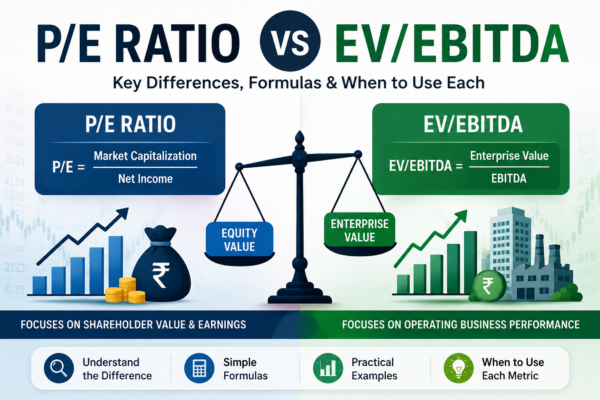
Enterprise Value and EV/EBITDA: Professional Valuation Tools
Enterprise value (EV) offers a more comprehensive view of a company’s valuation than market capitalization alone. It accounts for equity value, debt, and cash, reflecting what it would truly cost to acquire the entire business.
The EV/EBITDA ratio compares enterprise value to earnings before interest, taxes, depreciation, and amortization. This metric is widely used by professionals because it allows fair comparison between companies with different capital structures and tax environments. It is particularly useful for evaluating mature businesses and potential acquisition targets.
While no single valuation method is perfect, using multiple ratios together helps investors arrive at a reasonable valuation range. Valuation is not about finding an exact number, but about avoiding extremes—paying too much for growth or overlooking quality because of misleadingly low multiples.
Discounted Cash Flow (DCF) Analysis: Calculating Intrinsic Value
Among all valuation methods, Discounted Cash Flow (DCF) analysis is considered one of the most conceptually sound approaches because it focuses directly on what ultimately matters—cash generated by the business over time. While it may appear complex at first, the underlying idea is simple and logical when broken down step by step.
Understanding the DCF Concept
DCF analysis is based on a straightforward principle: the value of a business equals the present value of all the cash it will generate in the future. This idea rests on the time value of money, which states that a dollar today is worth more than a dollar received in the future because today’s dollar can be invested, earns returns, and carries less uncertainty.
When investors use DCF, they are essentially asking: “What should I pay today for this company’s future cash generation?” Instead of focusing on short-term market prices, DCF forces investors to think like business owners, estimating how much cash the company can realistically produce and discounting those future amounts back to today’s value. The result is an estimate of the company’s intrinsic value, independent of market sentiment.
Key Components of DCF Modeling
A DCF model has a few core building blocks, and understanding them conceptually is far more important than memorizing formulas. The first step is estimating free cash flow, which represents the cash a business generates after covering operating expenses and necessary investments. This is the cash available to reward shareholders or reinvest for growth.
Next comes selecting an appropriate discount rate, often based on the company’s weighted average cost of capital (WACC). The discount rate reflects the risk of the business and the return investors require for tying up their money. Higher-risk businesses demand higher discount rates, which reduce present value.
The model then estimates a terminal value, representing the business’s value beyond the explicit forecast period. This accounts for the fact that companies are expected to continue operating far into the future. Finally, all projected cash flows and the terminal value are discounted back to the present, and their total represents the estimated intrinsic value.
For beginners, the key is not precision but reasonable, conservative assumptions. Overly optimistic growth or low discount rates can produce misleading valuations.
Strengths and Limitations of DCF Analysis
DCF’s greatest strength is that it provides a structured, fundamentals-based framework for valuation. It shifts focus away from market moods and toward business economics, encouraging long-term thinking.
However, DCF is highly sensitive to assumptions. Small changes in growth rates or discount rates can significantly alter the final valuation. Because of this sensitivity, DCF works best for stable, predictable businesses with relatively steady cash flows. It is less reliable for early-stage companies, highly cyclical industries, or businesses facing uncertain futures, where cash flow projections become speculative.
Margin of Safety: Protecting Against Uncertainty
Because no valuation model can perfectly predict the future, investors rely on the concept of margin of safety to protect themselves from errors and unforeseen events. Margin of safety means buying a stock at a significant discount to its estimated intrinsic value rather than paying full price.
Value investors often seek margins of safety ranging from 20% to 50%, depending on business stability and uncertainty. The idea is not to calculate an exact value, but to establish a safe range. As Benjamin Graham famously illustrated, if you know a person weighs between 250 and 300 pounds, you don’t need the exact number to know whether an elevator can safely carry them.
Applied to investing, margin of safety acknowledges uncertainty while still enabling rational decision-making. Combined with disciplined assumptions, it turns DCF from a fragile model into a practical tool for long-term investors.
Qualitative Factors: The Human Side of Fundamental Analysis
While numbers explain what has happened, qualitative factors help investors judge what is likely to happen next. Many long-term investment successes—and failures—can be traced back to non-numerical elements such as leadership decisions, competitive positioning, and the ability to adapt to change. Ignoring these factors often leads to investing in companies that look good on paper but struggle in reality.
Management Quality and Corporate Governance
Management plays a decisive role in shaping a company’s long-term trajectory. Executives decide where to invest capital, how aggressively to grow, how much risk to take, and how transparently to communicate with shareholders. Even a strong business can be damaged by poor leadership, while capable management can revive struggling companies.
Investors evaluate management quality by examining track records, especially how leaders have handled past opportunities and crises. Good managers allocate capital wisely—reinvesting in high-return projects, avoiding reckless acquisitions, and returning excess cash to shareholders when appropriate. Transparent communication through annual reports, earnings calls, and shareholder letters builds trust, while insider ownership often signals alignment between management and shareholders.
Warning signs of poor management include frequent and unexplained strategy changes, consistently missed guidance, excessive executive compensation unrelated to performance, aggressive accounting practices, or a history of governance scandals. Many corporate failures occurred not because the business lacked potential, but because management decisions destroyed value over time.
Competitive Advantages (Economic Moats)
The concept of an economic moat, popularized by Warren Buffett, refers to sustainable competitive advantages that protect a company from rivals. A strong moat allows a business to maintain pricing power, profitability, and market share for long periods, even as competitors try to enter the space.
Moats can take several forms. Brand strength creates customer loyalty and trust, as seen with Coca-Cola. Network effects occur when a product becomes more valuable as more people use it, a key driver behind platforms like Amazon’s marketplace. Cost advantages allow companies such as Walmart to operate profitably at lower prices than competitors. Switching costs make it difficult or inconvenient for customers to change providers, while regulatory advantages can limit competition through licenses or legal protections.
Companies with wide moats tend to generate consistent returns over decades, while those without moats often face shrinking margins as competition intensifies.
Industry Dynamics and Market Position
A company’s performance is also shaped by the industry it operates in. Understanding industry dynamics helps investors assess whether profits are sustainable or constantly under threat. One widely used framework is Porter’s Five Forces, which examines competitive rivalry, supplier power, buyer power, the threat of substitutes, and barriers to entry.
Industries with high barriers to entry, limited competition, and stable demand generally offer better long-term prospects. In contrast, highly commoditized industries with intense price competition often struggle to generate consistent profits. Within any industry, investors should also understand where the company stands—whether it is a market leader, a niche specialist, or a weaker player fighting for survival.
Products, Innovation, and Market Trends
At the core of every business is a product or service. Investors should ask whether the company solves a real customer problem and whether demand for that solution is growing, stable, or declining. Businesses that consistently meet customer needs and adapt to changing preferences tend to survive and thrive.
Innovation plays a critical role here. Companies that invest in research, technology, and process improvement are better positioned to respond to new competitors and shifting market conditions. On the other hand, businesses whose products face obsolescence risks—due to technological disruption or changing consumer behavior—can see their competitive position erode quickly.
Qualitative analysis brings context and realism to financial data. When combined with strong quantitative fundamentals, it helps investors identify not just profitable companies, but durable businesses capable of creating value over the long term.
Step-by-Step Process: How to Perform Fundamental Analysis
Fundamental analysis works best when it follows a disciplined, repeatable process. Randomly checking ratios or reacting to news often leads to emotional decisions and inconsistent results. The step-by-step framework below mirrors how experienced investors analyze businesses in the real world—from first filter to long-term ownership decisions.
Step 1: Define Your Investment Goals and Criteria
Every strong analysis begins with clarity of intent. Before looking at any stock, you must know why you are investing. Different goals demand different evaluation standards.
Growth investors focus on expanding revenues, rising earnings, and increasing market share. Value investors seek fundamentally sound businesses trading below intrinsic value. Income investors prioritize stable cash flows and sustainable dividends. Mixing these goals without clarity often leads to confusion and poor decisions.
Defining clear criteria upfront—such as minimum return on equity, acceptable debt levels, consistency of profits, or dividend requirements—acts as a filter. It prevents emotionally driven investments and ensures every stock you analyze fits your long-term objective.
Step 2: Initial Screening Using Financial Ratios
Once your goals are clear, the next step is screening. Stock markets contain thousands of listed companies, and detailed analysis of all of them is neither practical nor necessary. Screening helps narrow the universe to a small group of candidates worth deeper study.
For beginners in the Indian market, simple and effective screening criteria may include consistent profit growth over the past three to five years, return on equity above 15%, manageable leverage with debt-to-equity below 1.0, and valuation ratios close to or below industry averages. Tools such as Screener.in, Moneycontrol, and broker research platforms make this process efficient.
It is important to remember that screening does not identify final investments. It merely eliminates weak businesses early, saving time and mental energy.
Step 3: Understanding the Business Model
After creating a shortlist, the focus shifts from numbers to business understanding. This step separates real investing from mechanical ratio analysis. Investors should study the company’s website, annual report overview, and recent developments to clearly understand how the business operates.
Ask simple but essential questions: How does the company make money? Who are its customers? What drives demand? What are the main risks? If you cannot explain the business in simple language, you likely do not understand it well enough to invest.
This idea aligns with the circle of competence principle emphasized by Warren Buffett—investors perform best when they stay within businesses they genuinely understand.
Step 4: Deep Dive into Financial Statements
Once the business model is clear, investors should analyze financial statements in detail. This involves studying balance sheet strength, income statement trends over five to ten years, and cash flow consistency. The objective is to identify patterns and direction, not isolated data points.
Strong businesses usually show steady revenue growth, stable or improving margins, disciplined capital allocation, and consistent conversion of profits into cash. Warning signs include declining margins, rising debt without corresponding growth, or profits that exist only on paper but not in cash flow.
Comparing these metrics with industry peers provides crucial context. Financial data can be accessed through annual reports, BSE and NSE filings, SEBI disclosures, and trusted financial platforms.
Step 5: Qualitative Assessment
At this stage, investors evaluate people, positioning, and durability. Management quality is assessed through past execution, capital allocation decisions, communication transparency, and governance standards. Reading management discussion sections, listening to earnings calls, and studying promoter history offer valuable insights.
Competitive positioning also matters. Investors should understand whether the company has defensible advantages or operates in a highly competitive, low-margin environment. Industry trends, regulatory risks, and long-term demand drivers help determine whether the business is likely to strengthen or weaken over time.
Step 6: Valuation and Price Target
After confirming business quality, valuation answers the final question: Is the current price reasonable? Investors estimate intrinsic value using multiple approaches—peer valuation comparisons, DCF analysis where applicable, or asset-based metrics depending on the business.
The goal is not to calculate an exact number but to determine a fair value range. Applying a margin of safety provides protection against estimation errors and unforeseen risks. If the stock price does not offer sufficient value, waiting patiently is often the best decision.
Step 7: Continuous Monitoring and Review
Fundamental analysis does not end after buying a stock. Businesses evolve, industries change, and assumptions must be revisited. Investors should regularly review quarterly results, annual reports, and major developments affecting the company.
If the original investment thesis weakens due to deteriorating fundamentals, governance issues, or structural changes, it is wise to reassess and act. Likewise, if the stock reaches or exceeds fair value, profit booking may be justified. Continuous monitoring ensures decisions remain business-driven rather than emotion-driven.
Practical Application: Fundamental Analysis in the Indian Stock Market
Applying fundamental analysis in India requires understanding where reliable information comes from, how financial reporting works, and how sector-specific dynamics differ. Indian markets offer rich disclosures, but investors must know how to interpret them correctly to avoid surface-level conclusions.
Where to Find Information for Indian Companies
India has a strong disclosure framework, and most essential information is freely available. BSE and NSE websites publish corporate announcements, quarterly results, shareholding patterns, and regulatory filings. These are primary sources and should always be preferred over summaries or opinions.
For grievance-related transparency and regulatory oversight, SEBI mandates disclosures and operates platforms such as SCORES, which reflect the emphasis on investor protection. Every listed company is required to publish quarterly and annual financial results, management discussions, and material event disclosures under SEBI regulations.
Company investor relations pages are another critical source, offering annual reports, earnings presentations, and conference call transcripts. For ratio analysis and quick historical comparisons, platforms like Screener.in are widely used. Market news and data can be tracked through Moneycontrol and Economic Times, while deeper analytical insights are available on platforms such as Tijori Finance and Trendlyne.
The key for investors is to rely on primary disclosures first, then use secondary platforms for analysis and cross-verification.
Understanding Indian Financial Regulations and Reporting
Indian companies follow Indian Accounting Standards (Ind AS), which are largely aligned with International Financial Reporting Standards (IFRS). This alignment improves comparability with global peers, but investors must still understand local nuances.
One important distinction in India is between standalone and consolidated financial statements. Standalone numbers reflect only the parent company, while consolidated statements include subsidiaries and associates. For groups with multiple businesses, consolidated financials usually provide a more accurate picture of economic reality.
Indian disclosures also emphasize areas particularly relevant to governance. Related party transactions must be reported, helping investors assess whether promoters or group entities are benefiting unfairly. Promoter shareholding and pledging disclosures are especially important in India, as high pledging can increase risk during market downturns. Understanding these elements helps investors judge transparency, alignment of interests, and potential governance red flags.
Sector-Specific Considerations in India
India’s economy is diverse, and sector-specific analysis is essential. Applying generic ratios without understanding sector dynamics can lead to incorrect conclusions.
For banking and NBFCs, traditional profitability metrics are not enough. Investors focus on net interest margin, non-performing assets (NPAs), capital adequacy ratios, and provision coverage, as these indicate asset quality and resilience during credit cycles.
In infrastructure and construction, revenues alone can be misleading. Order books, execution timelines, working capital cycles, and receivable management are critical, as delays can strain cash flows despite strong reported growth.
For IT services, analysis centers on client concentration, revenue visibility, pricing power, and employee attrition rates. Stable long-term contracts and low client concentration generally indicate more predictable earnings.
In the pharmaceutical sector, regulatory approvals and compliance play a major role. Investors track USFDA inspections, patent expiries, litigation risks, and the strength of the R&D pipeline, as these factors can materially impact future earnings.
Understanding these India-specific nuances allows investors to adapt fundamental analysis to local realities, improving decision-making and reducing avoidable risks.
Common Mistakes to Avoid in Fundamental Analysis
Even well-intentioned investors make mistakes when applying fundamental analysis, especially in the early stages. Most errors do not come from lack of information, but from misinterpreting data, ignoring context, or allowing psychology to interfere with logic. Being aware of these common pitfalls can significantly improve decision-making and protect long-term capital.
Overreliance on Single Metrics
One of the most frequent mistakes is making investment decisions based on a single ratio, such as a low P/E or a high dividend yield. While these metrics are useful, they never tell the full story on their own. A stock may appear cheap on a P/E basis not because it is undervalued, but because earnings are declining, competitive pressure is rising, or the business model is weakening.
Metrics must always be interpreted in combination with other financial indicators, qualitative factors, and industry context. A low valuation ratio should raise questions, not provide automatic reassurance. Fundamental analysis works best when multiple data points point in the same direction.
Ignoring Qualitative Red Flags
Attractive numbers can be dangerously misleading if qualitative warning signs are ignored. Some companies have reported strong revenues and profits for years, only to collapse later due to fraud, governance failures, or unethical management practices. Financial statements often look healthy until problems become impossible to hide.
Ignoring red flags such as frequent management changes, opaque disclosures, related-party transactions, or a history of regulatory issues exposes investors to avoidable risk. Long-term investing requires trust in leadership and governance. If these foundations are weak, even impressive financial performance may prove temporary.
Failing to Understand the Business
Investing in businesses you do not understand violates one of the most basic investment principles. Complex companies with unclear revenue models, heavy dependence on uncertain technology, or opaque operations increase the risk of unpleasant surprises.
If you cannot clearly explain how the company makes money, who its customers are, and what drives demand, financial metrics lose much of their meaning. Understanding the business in simple terms is more important than mastering advanced valuation models. Clarity reduces risk far more effectively than complexity.
Neglecting Industry and Economic Context
Company-level analysis alone is not sufficient. Even fundamentally strong businesses can struggle if they operate in declining industries or face unfavorable economic conditions. Changes in regulation, technology, consumer behavior, or interest rates can materially affect performance.
Ignoring industry trends or broader economic signals may lead investors to overestimate a company’s future prospects. While great businesses can survive tough environments, sustained headwinds can limit growth and profitability. Fundamental analysis is strongest when it considers both company-specific strength and external conditions.
Anchoring to Purchase Price
Another common psychological trap is anchoring—placing excessive importance on the price paid for a stock. Investors often hold on to losing positions simply because they want to “get back to break-even,” even when fundamentals have clearly deteriorated.
Good investing decisions should be based on current value and future prospects, not past prices. If new information shows that the original investment thesis is no longer valid, accepting a loss can be the rational choice. Holding indefinitely in hope rather than logic often leads to larger losses.
Analysis Paralysis and Overcomplication
Beginners sometimes believe that better investing requires more complexity—more ratios, more models, more assumptions. In reality, excessive detail can lead to analysis paralysis, where no decision feels safe enough to make.
Perfect accuracy in valuation is impossible. Markets are uncertain, and future outcomes cannot be predicted precisely. Starting with simple, robust analysis methods and applying a margin of safety is far more effective than building fragile, overly complex models. Over time, experience—not complexity—leads to better judgment.
Avoiding these common mistakes helps investors apply fundamental analysis as it was intended: as a disciplined, rational process focused on long-term business value rather than short-term noise or emotional reactions.
Advanced Concepts for Serious Learners
Once investors are comfortable with the basics of fundamental analysis, deeper tools can improve judgment and refine valuation decisions. These advanced concepts are commonly used by professional analysts, institutional investors, and experienced individuals to better understand business value, risk, and uncertainty. They are not mandatory for beginners, but they add depth and precision when applied thoughtfully.
Comparable Company Analysis (Comps)
Comparable company analysis, often called comps, values a company by comparing it with similar businesses in the same industry. Instead of asking what a company is worth in isolation, this approach asks how the market values comparable firms with similar business models, growth profiles, and risk characteristics.
The process begins by selecting an appropriate peer group. Companies should be similar in terms of industry, size, geography, and revenue drivers. Differences in growth rates, margins, or leverage are then considered to adjust expectations. Valuation multiples such as P/E, EV/EBITDA, or P/B are compared across peers to derive a reasonable valuation range rather than a single number.
Comps are particularly useful because they reflect current market conditions, but they also carry a limitation: if the entire sector is overvalued or undervalued, comparisons may reinforce those extremes rather than reveal intrinsic value.
Sum-of-the-Parts Valuation
Sum-of-the-parts valuation is used for diversified or conglomerate companies that operate multiple, distinct businesses. Instead of valuing the company as a single entity, each business segment is analyzed separately using appropriate valuation methods, and the individual values are then added together.
This approach is especially relevant when different segments operate in unrelated industries or have very different growth and risk profiles. For example, a company with manufacturing, financial services, and technology divisions may deserve separate valuations for each unit. In many cases, the market undervalues conglomerates because their complexity makes analysis difficult.
Sum-of-the-parts valuation helps investors identify situations where the combined market value does not fully reflect the worth of individual businesses, offering insight into potential value unlocking through restructuring or strategic changes.
Scenario Analysis and Sensitivity Testing
Future outcomes are uncertain, and single-point estimates can be misleading. Scenario analysis addresses this uncertainty by evaluating a company under multiple plausible futures. Typically, investors consider a base case reflecting reasonable expectations, an optimistic case assuming favorable conditions, and a pessimistic case accounting for adverse developments.
This approach helps investors understand the range of possible outcomes rather than relying on one forecast. Complementing scenario analysis is sensitivity testing, which examines how changes in key assumptions—such as growth rates, margins, or discount rates—impact valuation results.
Sensitivity analysis reveals which assumptions matter most and where valuation is most fragile. This insight helps investors focus on the variables that truly drive value and avoid overconfidence in precise but uncertain forecasts.
Quality of Earnings Analysis
Not all reported earnings are equal. Quality of earnings analysis examines whether profits represent genuine economic value or are influenced by accounting choices and short-term tactics. High-quality earnings are sustainable, cash-backed, and repeatable.
Warning signs include aggressive revenue recognition, frequent capitalization of expenses, rising receivables without corresponding revenue growth, persistent differences between net income and operating cash flow, and repeated “one-time” charges that occur year after year. Deteriorating working capital trends can also indicate that reported profits are not translating into real cash.
By assessing earnings quality, investors move beyond headline numbers and gain a clearer picture of business reality. This step is particularly valuable when analyzing companies that appear attractive on the surface but may be masking underlying weaknesses.
These advanced concepts deepen fundamental analysis and improve risk awareness. Used selectively and with discipline, they help serious learners refine valuation judgments and avoid costly mistakes driven by incomplete or overly simplistic analysis.
Tools and Resources for Fundamental Analysis
Having the right tools does not guarantee good investing decisions, but using reliable resources dramatically improves efficiency and accuracy. Beginners can perform solid fundamental analysis using free platforms, while advanced investors may choose paid tools for deeper insights and time savings. The key is matching tools to your experience level and needs.
Free Resources for Beginners
Most individual investors can start with entirely free resources and still perform high-quality fundamental analysis. For Indian stocks, Screener.in is widely used for ratio analysis, historical financials, and quick screening. It helps beginners compare companies across multiple years without digging into raw statements initially.
For global markets, Yahoo Finance and Google Finance provide financial statements, valuation metrics, and price history. These platforms are useful for understanding international companies and cross-market comparisons.
Primary disclosures should always come directly from company investor relations pages, where annual reports, earnings presentations, and management commentary are published. In India, regulatory filings and disclosures mandated by SEBI ensure access to quarterly and annual financial results, shareholding patterns, and material announcements.
For structured learning, educational platforms like Zerodha Varsity and Investopedia offer beginner-friendly explanations of fundamental analysis concepts. These resources help build foundational knowledge without cost or complexity.
Paid Tools and Platforms
As investors gain experience or manage larger portfolios, paid tools can provide deeper analysis, better visualization, and time-saving features. At the professional end, the Bloomberg Terminal offers comprehensive global data, news, analytics, and valuation tools, though it is typically used by institutions due to high cost.
For Indian markets, platforms like Tijori Finance and Trendlyne provide detailed business analysis, financial ratios, peer comparisons, and valuation insights. Internationally, Morningstar is known for its independent research, ratings, and long-term investment focus.
Broker research platforms also add value. Firms such as ICICI Direct, HDFC Securities, and Zerodha offer company reports, sector insights, and analyst commentary. While these should not replace independent analysis, they can provide useful supplementary perspectives.
Books and Educational Resources
Books remain some of the most powerful tools for mastering fundamental analysis because they teach thinking frameworks, not just formulas. The Intelligent Investor by Benjamin Graham lays the foundation for value investing and margin of safety. One Up on Wall Street by Peter Lynch explains how individual investors can identify opportunities using everyday knowledge. Common Stocks and Uncommon Profits focuses on qualitative factors and long-term business quality.
For Indian investors, Stocks to Riches provides valuable perspective on investing discipline, behavior, and long-term thinking in the Indian context. In addition, free and paid courses from institutions like the NSE Academy—including the NCFM module on Fundamental Analysis—offer structured learning for those seeking formal certification or deeper understanding.
Used wisely, these tools and resources support informed decision-making. The goal is not to use every platform available, but to build a reliable, repeatable toolkit that complements your investing process and grows with your experience.
Combining Fundamental Analysis with Portfolio Management
Fundamental analysis helps you decide what to buy, but portfolio management determines how much to buy, how long to hold, and when to sell. Without disciplined portfolio rules, even correct analysis can produce poor results. Combining both ensures that good ideas translate into consistent, long-term outcomes.
Position Sizing Based on Conviction
Not all investments deserve equal weight in a portfolio. Position sizing should reflect your level of conviction, which is built through fundamental analysis. A business with strong financials, capable management, durable competitive advantages, and a wide margin of safety justifies a larger allocation than a marginal or uncertain opportunity.
A practical approach for many investors is to start with equal-sized positions when initiating investments. As understanding deepens and confidence increases through ongoing research and performance tracking, position sizes can be adjusted. Stronger businesses may be gradually increased, while weaker or less certain positions remain smaller.
This approach reduces early mistakes and allows conviction to grow organically. It also limits damage from errors, because no single idea dominates the portfolio before it has truly earned that trust.
Diversification vs. Concentration
One of the most debated topics in investing is whether to diversify widely or concentrate on a few high-quality ideas. Diversification reduces risk by spreading capital across multiple businesses, while concentration increases potential returns by allocating more to the best opportunities.
Experienced investors such as Warren Buffett advocate concentration in the highest-conviction ideas, arguing that owning many mediocre businesses dilutes returns. However, this approach requires deep understanding, discipline, and the ability to tolerate volatility.
For beginners, broader diversification is usually wiser. Holding a reasonable number of stocks reduces the impact of analytical errors and unexpected events. As skills improve and confidence in evaluating businesses grows, selective concentration can be introduced gradually. The right balance depends on experience, temperament, and analytical depth.
When to Sell Based on Fundamentals
Selling decisions are often more difficult than buying decisions. A clear sell discipline, grounded in fundamentals rather than emotions, is essential.
One valid reason to sell is deterioration in business fundamentals that undermines the original investment thesis—such as declining competitive position, persistent margin erosion, or governance concerns. Another reason is discovering that the original analysis was flawed after deeper understanding or new information emerges.
Selling may also be justified when significantly better opportunities appear and capital must be reallocated, or when a stock becomes overvalued relative to its fundamentals after substantial gains. In such cases, holding simply because the price has risen can increase risk.
Importantly, selling should not be driven by short-term price fluctuations. Portfolio management works best when decisions are based on changes in business value, not market noise.
When fundamental analysis is integrated with thoughtful portfolio management, investing becomes more than stock selection—it becomes a disciplined process. This combination helps investors control risk, allocate capital efficiently, and stay focused on long-term wealth creation rather than short-term market movements.
Conclusion: Your Path Forward with Fundamental Analysis
Fundamental analysis is not a talent you are born with—it is a skill you develop. Anyone willing to invest time in learning, observing businesses, and thinking logically can apply it successfully. In the beginning, the process may feel overwhelming. Financial statements, ratios, valuation methods, and qualitative factors can seem complex when seen all at once. This is normal. Confidence grows not from mastering everything immediately, but from consistent practice.
A practical way to start is by analyzing companies in familiar industries—businesses whose products or services you already understand as a consumer. Simple, understandable companies make it easier to connect numbers with real-world activity. Over time, as you analyze more businesses, patterns become clearer and judgment improves.
Markets and businesses are constantly evolving, which makes continuous learning essential. Even experienced professionals make mistakes, and no analysis method guarantees perfect outcomes. The goal of fundamental analysis is not prediction, but process improvement—making better decisions more often than not. Focusing on disciplined analysis, realistic assumptions, and margin of safety matters far more than chasing precision.
Long-term success also depends on how analysis is applied. Combining fundamental analysis with sensible diversification, thoughtful position sizing, and emotional discipline creates a sustainable investing approach. Avoiding overconfidence, resisting short-term noise, and reviewing decisions calmly during market volatility are as important as selecting good businesses.
It is equally important to recognize that all investments carry risk. Fundamental analysis reduces uncertainty, but it cannot eliminate it. Investors should only invest money they can afford to keep invested through market ups and downs, and they should consider consulting qualified financial advisors for personalized guidance. This guide is intended for educational purposes and does not constitute investment advice.
Ultimately, fundamental analysis empowers investors. It shifts decision-making away from crowd behavior, hype, and fear, and toward informed, rational choices based on business value. With patience and discipline, it gives you greater control over your financial journey and a stronger foundation for long-term wealth building.
Common FAQs About Fundamental Analysis
What is the main purpose of fundamental analysis?
The primary purpose of fundamental analysis is to determine a stock’s intrinsic or true value by comprehensively evaluating the underlying business, its financial health, competitive position, and growth prospects. This calculated intrinsic value helps investors make informed decisions about whether a stock is undervalued, fairly valued, or overvalued at its current market price.
Fundamental analysis serves long-term investors who want to build conviction in their holdings based on business quality rather than short-term price movements. By understanding what a company is genuinely worth, investors can make rational buy-and-sell decisions independent of market sentiment, which often swings between fear and greed.
Can beginners do fundamental analysis without financial expertise?
Yes, beginners can absolutely learn and apply fundamental analysis, though it requires commitment to understanding basic financial concepts. You don’t need an accounting or finance degree to evaluate companies effectively. Starting with fundamental concepts like revenue growth, profit margins, debt levels, and cash flow provides a sufficient foundation for assessing most businesses.
Many successful investors, including Peter Lynch, advocate that individual investors have advantages in understanding certain businesses through their everyday experiences as consumers. Begin with simple companies in industries you understand, gradually building skills before tackling complex businesses. Numerous free educational resources exist, specifically designed to teach fundamental analysis to beginners without overwhelming them with technical jargon.
How long does it take to perform fundamental analysis on one company?
Initial screening using financial ratios and basic metrics can take just 15-30 minutes to eliminate unsuitable companies. However, thorough fundamental analysis of a shortlisted company typically requires 3-5 hours for beginners and 1-2 hours for experienced analysts, spread across reading annual reports, analyzing financial statements, researching management, evaluating competitors, and performing valuation calculations.
The time investment pays off through better investment decisions and reduced risk. Remember that you’re essentially deciding whether to commit potentially thousands or tens of thousands of your hard-earned money to this company. Spending several hours on due diligence before investing is far wiser than spending equivalent time later worrying about a hasty decision.
Is fundamental analysis useful for short-term trading?
Fundamental analysis primarily serves long-term investors rather than short-term traders because business fundamentals change gradually over quarters and years, not days or weeks. Stock prices in the short term are driven more by market sentiment, news flow, and technical factors rather than fundamental value changes. Short-term traders typically achieve better results using technical analysis to identify price patterns and momentum.
However, even active traders often use fundamental analysis to filter their trading universe, focusing only on fundamentally sound companies to reduce the risk of catastrophic losses from holding fundamentally weak businesses. The ideal approach combines fundamental analysis to select what to trade with technical analysis to determine when to enter and exit positions.
What’s the difference between fundamental and technical analysis?
Fundamental analysis evaluates a company’s business quality, financial health, and intrinsic value by examining financial statements, management quality, competitive advantages, and industry dynamics. It answers “What should I invest in?” by identifying whether a stock represents good value. Technical analysis, conversely, studies price charts, volume patterns, and market psychology to predict future price movements, answering “When should I buy or sell?”
The two approaches complement rather than contradict each other. Fundamental analysis suits long-term investors building core portfolios based on business quality, while technical analysis benefits traders optimizing entry and exit timing. Professional investors often combine both methods, using fundamentals to select worthy investments and technicals to improve execution prices.
Which financial ratios are most important for beginners?
Beginners should focus on a handful of essential ratios covering profitability, financial health, and valuation. Start with the Price-to-Earnings ratio to assess whether the stock is expensive or cheap relative to earnings, Return on Equity to measure how effectively the company generates profits from shareholder capital, and the Debt-to-Equity ratio to evaluate financial leverage and risk.
Additionally, learn profit margins to understand how much of each revenue dollar converts to profit, the current ratio to assess short-term financial health, and earnings per share growth trends to gauge whether the business is expanding. As you gain experience, gradually incorporate more specialized ratios relevant to specific industries, but these core metrics provide solid foundational analysis for most companies.
How accurate is fundamental analysis in predicting stock performance?
Fundamental analysis doesn’t predict short-term stock price movements with precision because prices are influenced by countless factors, including market sentiment, macroeconomic events, and technical trading patterns. However, research consistently shows that fundamentally strong companies with solid earnings growth, healthy balance sheets, and competitive advantages tend to outperform over longer periods of 3-5+ years.
The accuracy improves when you combine thorough fundamental analysis with an appropriate margin of safety, patient holding periods, and diversification across multiple fundamentally sound companies. No analysis method guarantees success, but fundamental analysis dramatically improves your odds by helping you avoid businesses with deteriorating fundamentals while identifying companies with sustainable competitive advantages.
Do I need expensive tools or subscriptions for fundamental analysis?
No, beginners can effectively perform fundamental analysis using entirely free resources. Company annual reports and quarterly results are freely available on BSE and NSE websites in India or company’s investor relations pages globally. Websites like Screener.in, Moneycontrol, and Yahoo Finance provide comprehensive financial data, ratios, and historical performance metrics at no cost.
Educational resources, including Zerodha Varsity, Investopedia, and YouTube channels, offer free tutorials on fundamental analysis concepts. While paid tools like Bloomberg Terminal or premium screeners offer convenience and deeper data, they’re unnecessary for individual investors starting out. As your portfolio grows and skills develop, you can consider whether paid tools justify their cost through improved efficiency.
How do I know if a company has good management?
Assessing management quality requires examining multiple factors over time rather than relying on single indicators. Review the promoter or CEO’s track record, looking for consistent strategic execution, transparent communication with shareholders, and capital allocation decisions that created long-term value. Read annual report letters to shareholders to understand management’s business philosophy and how honestly they discuss challenges alongside successes.
Check insider ownership levels, as managers with significant personal stakes tend to make decisions aligned with shareholder interests. Research any past controversies, regulatory actions, or ethical concerns. Watch or read transcripts of earnings calls to evaluate how clearly management explains business performance and responds to difficult questions. Compare promises made in previous years to actual results delivered, which reveals whether management sets realistic expectations and follows through.
What is a margin of safety, and why is it important?
Margin of safety, a concept popularized by Benjamin Graham, means buying stocks at prices significantly below calculated intrinsic value to protect against errors in analysis or unexpected adverse developments. If you estimate a company’s fair value at Rs. 1,000 per share, you might only buy if the market price falls to Rs. 600-700, providing a 30-40% margin of safety.
This cushion protects you because fundamental analysis involves assumptions and estimates that may prove incorrect. Companies face unpredictable challenges, including new competition, regulatory changes, management missteps, or economic downturns. A sufficient margin of safety means even if your analysis contains errors or circumstances change unfavorably, you’re less likely to suffer permanent capital loss. The margin required depends on business predictability, with stable businesses requiring smaller margins while uncertain businesses demand larger safety buffers.
Should I analyze Indian stocks differently from international stocks?
The core principles of fundamental analysis apply universally across markets, but Indian stocks do require awareness of some specific considerations. Focus on regulatory frameworks like SEBI disclosure requirements, accounting standards (Ind AS), corporate governance practices that vary from Western markets, and India-specific economic factors, including infrastructure development, demographic trends, and policy changes.
Indian markets also have unique characteristics like higher retail participation, lower institutional ownership in many mid and small cap companies, and different industry dynamics. Certain sectors prominent in India, like IT services, generic pharmaceuticals, and infrastructure, need a specialized understanding. However, the fundamental process of evaluating financial health, competitive advantages, management quality, and valuation remains identical regardless of geography.

You may also like

Price to Sales Ratio (P/S): Formula, Meaning & Calculation
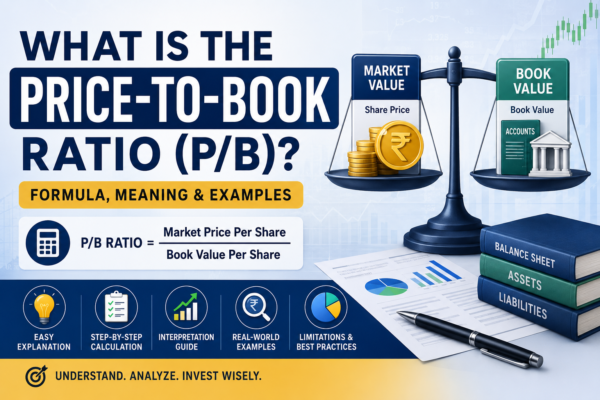
What Is the Price-to-Book Ratio? Formula, Meaning & Examples