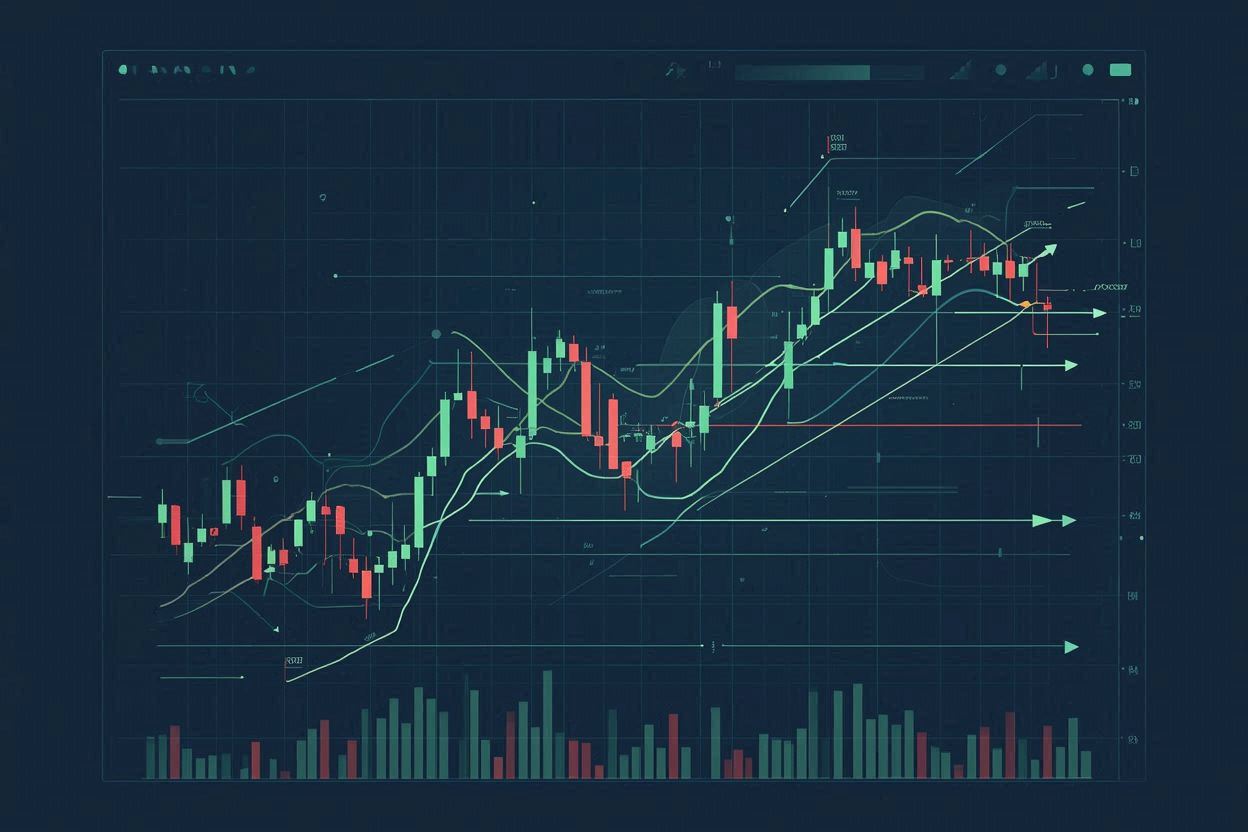
Technical Analysis Explained: Charts, Patterns & Indicators
Technical Analysis: A Complete Guide to Reading Market Charts and Price Patterns
If you have ever watched stock prices move up and down on a screen and wondered why they are moving, you are not alone. Most beginners open a chart, see green and red candles, hear words like RSI, MACD, support, resistance—and feel completely lost. The market seems random, fast, and confusing. One day prices rise without news, another day they fall despite “good fundamentals.” This confusion is where many people either give up or start guessing.
Technical analysis exists to remove that guesswork.
It is a systematic way of studying price and volume data to understand how markets behave and how traders collectively think and act. Instead of asking what should the price be, technical analysis focuses on what the price is actually doing and what that behavior may indicate next.
At the same time, it’s important to be clear and honest: technical analysis is not magic and it does not predict markets with certainty. It works with probabilities, not guarantees. Used correctly, it helps you structure decisions, manage risk, and avoid emotional trading. Used incorrectly, it can create false confidence.
In this guide, you’ll learn how to read market charts, understand key patterns and indicators, recognize trends, and think in terms of probabilities—not predictions. This content is purely educational, designed to build understanding, not to offer trading or investment advice.
Table of Contents
What is Technical Analysis? Understanding the Core Concept
Technical analysis is the study of past market data—mainly price and volume—to understand and anticipate future price movement. In simple terms, it focuses on how the market is behaving, not on why a company should be worth a certain price. Instead of analyzing balance sheets or economic reports, technical analysis studies charts to identify patterns, trends, and signals created by collective market behavior.
The core idea behind technical analysis is straightforward: price reflects all available information. Every known factor—earnings, news, expectations, fear, greed, institutional activity—is already built into the current market price. When buyers are more aggressive than sellers, prices rise. When sellers dominate, prices fall. Technical analysts believe that by studying these price movements, we can understand the underlying psychology driving the market.
At its heart, technical analysis is also a study of crowd behavior. Markets are made up of humans—and humans tend to react in similar ways under similar conditions. Fear leads to panic selling, greed leads to euphoric buying, and uncertainty leads to sideways movement. These emotional reactions repeat over time, which is why certain price patterns and behaviors appear again and again across different markets and timeframes.
A useful real-world analogy is weather forecasting. Meteorologists don’t control the weather, and they don’t know the exact physics behind every air molecule in real time. Instead, they study patterns, pressure systems, and historical data to estimate what is likely to happen next. Technical analysis works the same way—it doesn’t guarantee outcomes, but it improves decision-making by identifying probabilities.
Historically, technical analysis has deep roots. Japanese rice traders developed candlestick charts centuries ago to understand supply-demand dynamics. Later, Dow Theory laid the foundation for modern trend analysis by observing how markets move in phases. Over time, these ideas evolved into the charting and indicator-based analysis used today.
In modern markets, technical analysis is used across stocks, forex, commodities, and cryptocurrencies. Its universal nature makes it especially powerful—price behavior follows similar principles whether you’re analyzing an equity index, a currency pair, or a digital asset.
Importantly, technical analysis is not just a retail trader’s tool. Institutional traders, hedge funds, and professional market participants also rely on it, especially for timing entries, exits, and managing risk. This widespread adoption adds to its credibility—not as a prediction tool, but as a structured decision-making framework.
Technical Analysis vs Fundamental Analysis (Quick Comparison)
| Aspect | Technical Analysis | Fundamental Analysis |
| Focus | Price & volume behavior | Company value & financial health |
| Key Question | When to buy or sell? | What to buy? |
| Data Used | Charts, indicators, trends | Financial statements, economy |
| Time Horizon | Short to long-term | Mostly long-term |
| Core Belief | Price reflects all information | Price may deviate from intrinsic value |
Both approaches have value—and many successful market participants use a combination of the two.
How Technical Analysis Actually Helps a Trader (Mental Model)
Technical analysis does not predict the market. It does not tell you what will happen next. Instead, it helps you prepare for what is more likely to happen and manage risk if you are wrong.
It helps with direction bias by answering a simple question: is the market more likely to move up, down, or sideways? It improves entry timing by identifying areas where buying or selling interest has appeared before. It supports exit planning, both for profits and losses, so decisions are not made emotionally in real time. Most importantly, it provides risk definition—clear price levels where your idea is proven wrong.
In short, technical analysis is a decision-support system. It brings structure, discipline, and clarity to an environment that often feels chaotic.
The Foundational Principles Behind Technical Analysis
At its core, technical analysis is built on a few simple but powerful assumptions about how markets behave. These principles guide how charts are read, why patterns are trusted, and how traders interpret price movement. Understanding them deeply is far more important than memorizing indicators or patterns, because every technical tool ultimately rests on these foundations.
Market Action Discounts Everything
Technical analysts believe that all known information is already reflected in the market price. This includes fundamental factors like earnings and growth expectations, macroeconomic data, political developments, institutional positioning, and even human emotions such as fear and greed. Whenever new information becomes available, market participants react—and that reaction shows up immediately in price movement.
This idea has a connection to the Efficient Market Hypothesis (EMH), particularly its weaker forms, which suggest that publicly available information is quickly absorbed by the market. From a practical chart-reading perspective, this means traders don’t need to analyze every news item or report individually. Instead, they focus on how price reacts to information. If “good news” appears but price fails to rise, that itself is meaningful data.
For a technical analyst, price is the final truth. Charts don’t explain why something happened, but they clearly show what the market did in response—and that response is what matters for decision-making.
Prices Move in Trends
Markets do not move randomly all the time. Prices tend to move in identifiable trends—upward, downward, or sideways—and often continue in that direction until a meaningful force causes a change. This concept is commonly explained using Newton’s first law of motion: an object in motion tends to stay in motion unless acted upon by an external force.
In market terms, once a trend is established, it often persists because participants adjust their behavior accordingly. Buyers gain confidence in uptrends, sellers become more aggressive in downtrends, and hesitation dominates sideways markets. One of the primary goals of technical analysis is trend identification, because trading in the direction of the trend generally offers higher probability than fighting against it.
History Tends to Repeat Itself
Markets are driven by human behavior, and human behavior is remarkably consistent over time. Fear, greed, hope, and panic do not change, even though markets and instruments do. Because of this, certain price patterns and formations appear repeatedly across different assets, time periods, and market conditions.
This repetition is partly psychological and partly self-fulfilling. When many traders recognize the same pattern or price level and act on it, their collective actions reinforce the outcome. The pattern works not because it is perfect, but because people respond to it in similar ways.
Together, these three principles explain why technical analysis works—not as a prediction tool, but as a framework for understanding market behavior and probabilities.
Essential Components of Technical Analysis Charts
When traders look at a chart, they are not just seeing lines or candles—they are seeing a visual record of market behavior over time. Charts organize thousands of individual trades into a format that allows patterns, trends, and important price levels to stand out. Understanding what you’re actually looking at is the first step toward meaningful technical analysis.
Understanding Price Charts: The Foundation of Analysis
Every price chart has two basic axes. The horizontal axis (X-axis) represents time—minutes, hours, days, weeks, or even years. The vertical axis (Y-axis) represents price. Each data point on the chart shows how price behaved during a specific time period, and when these points are connected, they reveal the market’s story.
One of the most important choices a trader makes is timeframe selection. A 1-minute chart shows short-term noise and rapid fluctuations, while a daily or weekly chart filters out much of that noise and highlights broader trends. Shorter timeframes are commonly used by intraday traders, while longer timeframes suit swing traders and long-term investors. The key insight is that the same market can look bullish on one timeframe and bearish on another, which is why context matters.
Charts don’t predict movement—they organize information so you can assess direction, strength, and structure more clearly.
Types of Charts Explained
Line Charts
Line charts are the simplest form of price representation. They connect closing prices over time, ignoring intraday highs and lows. Because of their simplicity, line charts are especially useful for beginners and long-term analysis. They help identify overall trend direction without the distraction of short-term volatility.
Bar Charts (OHLC)
Bar charts display Open, High, Low, and Close (OHLC) data for each period. Each vertical bar represents the price range, with small horizontal ticks indicating the opening and closing prices. Bar charts provide more detail than line charts and allow traders to see how price moved within a session—revealing whether buyers or sellers were more aggressive during that period.
Candlestick Charts
Candlestick charts are the most widely used format today. Each candle has a body, showing the difference between open and close, and wicks or shadows, showing the high and low of the period. Color coding (commonly green for up, red for down) makes price behavior visually intuitive. Japanese candlesticks became the global standard because they clearly express market psychology—who was in control and how strong that control was.
Point and Figure Charts
Point and Figure charts take a different approach. They focus only on price movement, ignoring time completely. These charts filter out small fluctuations and highlight significant price changes, making them useful for identifying major support, resistance, and breakouts. While less common, they remind traders that price—not time—is the core variable.
Volume: The Often-Overlooked Second Dimension
Price tells where the market is going, but volume tells how strongly it’s going there. Volume measures the number of shares or contracts traded during a period. High volume during a price move suggests strong participation and conviction. Low volume suggests hesitation and weak momentum.
When prices rise on increasing volume, the move is generally considered healthier. When prices rise on declining volume, it may signal a lack of commitment and a potential reversal. Similarly, heavy volume during sell-offs can indicate panic or capitulation, often near turning points.
Used correctly, volume acts as a confirmation tool, helping traders distinguish meaningful moves from false ones. Understanding how price and volume interact adds depth to chart analysis—something many beginners overlook but experienced traders rely on heavily.
By understanding chart structure, chart types, and volume, traders move beyond random lines on a screen and begin reading charts as organized expressions of market behavior.
Support and Resistance: The Cornerstone Concepts
Support and resistance are among the most important and widely used concepts in technical analysis. Almost every chart pattern, indicator, or trading setup ultimately relies on understanding where price is likely to pause, reverse, or accelerate. For beginners, these concepts provide a clear framework for reading charts without relying on complex tools.
What Are Support and Resistance Levels?
Support is a price area where buying interest has historically been strong enough to stop or slow a decline. It acts like a floor, where demand tends to emerge as price falls. Resistance, on the other hand, is a price area where selling pressure has repeatedly prevented price from moving higher, acting like a ceiling.
The reason these levels work is largely psychological. Traders remember prices where significant activity occurred in the past—previous highs, lows, or areas of heavy trading. When price returns to those levels, market participants react again. Buyers who missed earlier opportunities may step in near support, while sellers who previously exited near resistance may sell again. This collective memory creates repeatable behavior around certain price zones.
How to Identify Support and Resistance on Charts
Support and resistance are best viewed as zones rather than exact lines. To identify them, traders look for areas where price has reversed or paused multiple times in the past. Connecting swing lows helps identify support zones, while connecting swing highs highlights resistance zones.
Horizontal levels are the most common and easiest to spot, especially for beginners. Round numbers—such as 100, 500, or 1,000—often act as psychological levels because humans naturally focus on them. In addition, tools like moving averages can act as dynamic support or resistance, adjusting with price over time rather than staying fixed.
The key is repetition: the more often price reacts near a level, the more relevant that level becomes.
Role Reversal: When Support Becomes Resistance
One of the most important concepts in technical analysis is role reversal. When price breaks below a well-established support level, that same area often becomes resistance in the future. Similarly, when price breaks above resistance, it may later act as support.
This happens because of trader psychology. Buyers who purchased near support and didn’t exit may become trapped when price falls below it. When price later returns to that level, they may sell to break even—creating resistance. Conversely, a successful breakout above resistance builds confidence, and traders may buy pullbacks to that same level, turning it into support.
Understanding role reversal helps traders avoid buying into resistance or selling into support.
Strength of Support and Resistance Levels
Not all levels are equally important. Stronger support and resistance levels usually share certain characteristics:
- Multiple price reactions at the same area
- High trading volume near the level
- Recent relevance (fresh levels matter more than very old ones)
- Higher timeframes (weekly levels are stronger than intraday ones)
The more factors that align, the more significant the level.
Indian Market Context
Support and resistance work exactly the same way in Indian markets such as NSE and BSE stocks. However, features like upper and lower circuit limits can cause sharper reactions near key levels. Market structure and liquidity differences may also influence how quickly price moves once a level breaks. Despite these nuances, the underlying psychology—and the usefulness of support and resistance—remains universal.
Mastering these concepts gives traders a strong foundation for nearly every technical analysis decision that follows.
Chart Patterns: Reading the Market’s Visual Language
Chart patterns are the visual expressions of market psychology. They form as buyers and sellers interact, hesitate, gain confidence, or lose conviction. For beginners, chart patterns often feel confusing because many articles either oversimplify them into “buy here, sell there” rules or overwhelm readers with dozens of formations. The goal of chart pattern analysis is not memorization—it is understanding what the market is communicating through price structure.
Continuation Patterns: When Trends Take a Breather
Continuation patterns appear when a market pauses temporarily after a strong move, before potentially continuing in the same direction. They reflect short-term indecision, not a change in the underlying trend.
Flags and Pennants
Flags and pennants usually form after a sharp price move, known as the “flagpole.” Price then consolidates in a narrow range, either in a small rectangle (flag) or a triangle (pennant). Psychologically, this represents traders taking profits while new participants prepare to enter. These patterns are typically short-lived and tend to resolve in the direction of the original trend, especially when volume expands during the breakout.
Rectangles and Symmetrical Triangles
Rectangles form when price moves sideways between clear support and resistance levels. They signal a balance between buyers and sellers. Symmetrical triangles, formed by converging trendlines, also indicate indecision. In both cases, the breakout direction often aligns with the prior trend, but confirmation through volume is crucial.
Wedges (Rising and Falling)
Wedges slope either upward or downward and usually develop more slowly. Depending on trend context, they often act as continuation patterns. A rising wedge in an uptrend or a falling wedge in a downtrend reflects weakening momentum before the trend resumes.
Reversal Patterns: Spotting Trend Changes
Reversal patterns suggest that an existing trend may be losing strength and that a change in direction is possible.
Head and Shoulders (and Inverse Head and Shoulders)
This is one of the most reliable and widely followed reversal patterns. It consists of a left shoulder, a higher head, and a lower right shoulder. The “neckline” connects the lows between these peaks. A break below the neckline, especially with increased volume, signals a potential trend reversal. The inverse version appears after downtrends and suggests a bullish reversal.
Double Tops and Bottoms
Double tops form when price fails twice to break above the same resistance level, signaling exhaustion of buying pressure. Double bottoms reflect repeated failure to break below support. These patterns are popular with beginners because they are easy to spot and clearly reflect failed attempts by one side of the market.
Triple Tops and Bottoms
Triple formations are similar but stronger, as repeated failures reinforce the idea that a level is significant. However, they take longer to form and are less frequent.
Rounding Bottoms and Tops
These patterns develop gradually and reflect slow shifts in sentiment rather than sudden reversals. Rounding bottoms often appear during accumulation phases, while rounding tops suggest distribution.
Pattern Reliability and Common Mistakes
Chart patterns are probabilistic tools, not guarantees. They indicate what may happen, not what must happen. Common beginner mistakes include seeing patterns everywhere (a psychological bias known as pareidolia), ignoring volume confirmation, entering trades before a clear breakout, and overlooking the broader timeframe context.
False Patterns and Market Noise
Not every shape on a chart is meaningful. Genuine patterns usually develop over time, appear at logical locations (support, resistance, or trend areas), and show clear structure. Random noise lacks consistency, volume confirmation, and context. Learning to ignore weak or rushed formations is a critical skill that separates disciplined traders from impulsive ones.
Context Rule: A Pattern Without Context Is Just a Shape
“A pattern without context is just a shape.”
- Location > Pattern
- Trend > Pattern
- Volume > Pattern
A perfect-looking pattern means little if it appears in the wrong place, against the dominant trend, or without volume support. Context gives patterns their meaning.
When understood properly, chart patterns become a powerful visual language—one that helps traders read market behavior instead of reacting emotionally to price movement.
Technical Indicators: Mathematical Tools for Market Analysis
Technical indicators are mathematical calculations applied to price and volume data. They help traders interpret market behavior more objectively by transforming raw price movement into structured signals. However, indicators are tools, not decision-makers. Used correctly, they add clarity and confirmation. Used incorrectly, they create confusion and false confidence.
The key to using indicators effectively is understanding what problem each indicator is designed to solve—trend, momentum, volatility, or participation—rather than treating them as prediction machines.
Why Most Beginners Fail with Indicators
Most beginners don’t fail because indicators don’t work; they fail because of how indicators are used.
Indicator overload is the most common mistake. New traders stack multiple indicators on a chart, often from the same category, hoping for certainty. The result is conflicting signals and analysis paralysis.
Another mistake is using indicators to predict instead of confirm. Indicators are derived from past price data—they cannot see the future. Their strength lies in confirmation: validating trend direction, momentum strength, or volatility conditions already visible in price.
Finally, beginners often forget a fundamental rule: price is always more important than the indicator. Indicators are secondary tools. If price action and structure contradict an indicator signal, price should take priority.
Trend-Following Indicators
Trend-following indicators help identify the direction and strength of a trend.
Moving Averages (Simple & Exponential)
A Simple Moving Average (SMA) gives equal weight to all prices in its calculation, while an Exponential Moving Average (EMA) gives more weight to recent prices, making it more responsive. Commonly used periods include 20, 50, and 200 days. Moving averages smooth price action, help define trend direction, and often act as dynamic support or resistance. Concepts like the golden cross and death cross reflect longer-term trend shifts.
MACD (Moving Average Convergence Divergence)
MACD combines multiple moving averages to show changes in momentum and trend direction. The signal line and histogram help visualize momentum acceleration or deceleration. MACD is especially useful for spotting momentum shifts within established trends.
ADX (Average Directional Index)
ADX measures trend strength, not direction. A rising ADX indicates a strengthening trend, while a low ADX suggests a ranging or sideways market. This helps traders decide whether trend-based strategies are appropriate.
Momentum Oscillators
Momentum indicators measure the speed of price movement, helping identify overbought, oversold, or weakening conditions.
Relative Strength Index (RSI)
RSI ranges from 0 to 100, with traditional overbought and oversold levels at 70 and 30. In strong trends, RSI can remain overbought or oversold for extended periods—a common source of confusion for beginners. RSI divergences, where price and RSI move in opposite directions, can signal potential reversals.
Stochastic Oscillator
Stochastic compares the closing price to the recent price range. It uses two lines—%K and %D—to indicate momentum shifts. Fast stochastic reacts quickly but produces more noise; slow stochastic smooths signals.
Commodity Channel Index (CCI)
Originally developed for commodities, CCI identifies cyclical momentum extremes and works across markets. It helps spot potential reversals during overextended moves.
Volatility Indicators
Volatility indicators show how much price is moving, not where it’s going.
Bollinger Bands
Bollinger Bands consist of a moving average with upper and lower bands based on standard deviation. Band contraction (“squeeze”) suggests low volatility and potential expansion. A common misconception is that price touching the band means automatic reversal—context matters.
Average True Range (ATR)
ATR measures market volatility without indicating direction. It is widely used for stop-loss placement and position sizing, helping traders adapt risk to market conditions.
Volume-Based Indicators
Volume indicators reveal participation and conviction behind price moves.
On-Balance Volume (OBV)
OBV is a cumulative indicator that tracks buying and selling pressure. Divergences between OBV and price can signal early trend changes.
VWAP (Volume Weighted Average Price)
VWAP is heavily used by institutional traders, especially intraday. Price often gravitates toward VWAP, making it a key reference for fair value and intraday bias.
Leading vs. Lagging Indicators
Most technical indicators are lagging because they are calculated from past data. This does not make them useless—it means they provide confirmation, not foresight. Leading indicators attempt to anticipate movement but are more prone to false signals.
Effective traders use indicator convergence—combining indicators from different categories (trend, momentum, volume) rather than stacking similar ones.
Indicator Limitations and Hidden Dangers
No indicator works in isolation. Over-optimization—tweaking settings to perfectly fit past data—creates strategies that fail in real markets. This is known as curve-fitting. Indicators should support price analysis, not replace it.
Technical indicators are most powerful when used sparingly, purposefully, and in context. They are tools to assist judgment, not substitutes for disciplined thinking.
Trend Analysis: The Primary Focus of Technical Traders
Trend analysis sits at the heart of technical analysis. While indicators, patterns, and tools provide signals, trends provide direction. Many experienced traders believe that identifying and trading in the direction of the trend is the single most important edge in the market. Everything else—entries, exits, indicators—works best when aligned with the prevailing trend.
Defining Uptrends, Downtrends, and Sideways Markets
An uptrend is defined by a series of higher highs and higher lows. Each pullback finds support at a level higher than the previous one, showing that buyers are willing to step in at increasingly higher prices. To draw an uptrend line, traders connect at least two or more swing lows, extending the line forward to act as dynamic support.
A downtrend is the opposite. It consists of lower highs and lower lows, indicating sustained selling pressure. Trendlines in downtrends are drawn by connecting swing highs and extended forward as dynamic resistance.
A sideways or range-bound market occurs when price moves within a horizontal range without making consistent higher highs or lower lows. In such conditions, trend-following strategies tend to perform poorly, and traders often shift focus to support and resistance trading instead.
Correctly identifying market structure prevents traders from forcing trades where no clear trend exists.
The Three Timeframe Horizons
Trend analysis becomes more powerful when viewed across multiple timeframes. Dow Theory introduced the idea that markets move in layered trends:
- Primary Trend: The dominant long-term direction, lasting months to years
- Secondary Trend: Intermediate corrections or retracements, lasting weeks to months
- Minor Trend: Short-term fluctuations, lasting days to weeks
Understanding this hierarchy helps traders avoid confusion. A short-term decline may feel bearish, but if it occurs within a strong primary uptrend, it may simply be a correction rather than a reversal. Analyzing multiple timeframes reduces the risk of trading aggressively against the larger market direction.
Trend Confirmation Techniques
Trends are confirmed through structure, volume, and indicator alignment. In uptrends, higher lows combined with expanding volume on upward moves signal healthy buying pressure. In downtrends, lower highs with increasing volume on declines confirm selling dominance.
Indicators such as moving averages or momentum oscillators can further validate trend strength, especially when signals align across timeframes. However, when price makes new highs but indicators fail to confirm, or volume weakens, it often signals trend exhaustion or potential reversal.
Why Trading Against the Trend Is a Common Beginner Mistake
Beginners frequently buy in downtrends because prices look “cheap” or sell in uptrends because prices feel “too high.” While emotionally tempting, this approach works against market momentum. Trend-following is psychologically difficult because it requires buying strength and selling weakness—but statistically, it improves probability.
Markets reward alignment, not prediction. By focusing on trend analysis, traders shift from guessing turning points to riding existing momentum, which is why trend analysis remains the primary focus of technical traders worldwide.
Fibonacci Retracement and Extension: Mathematics Meets Markets
Fibonacci analysis is one of the most discussed—and debated—tools in technical analysis. It is based on the Fibonacci sequence, a mathematical series where each number is the sum of the two preceding ones. Ratios derived from this sequence, especially the golden ratio (approximately 61.8%), appear repeatedly in nature—from plant growth patterns to galaxies. Technical analysts apply these same ratios to financial markets to identify areas where price may pause, reverse, or extend.
In market terms, Fibonacci levels are used to identify potential support and resistance during pullbacks and breakouts. The most commonly used retracement levels are 23.6%, 38.2%, 50%, 61.8%, and 78.6%. These percentages represent how much of a prior price move has been retraced. When a market is trending, price often pulls back to one of these levels before resuming the trend, making them useful reference zones rather than precise turning points.
How to Apply Fibonacci Tools
To apply Fibonacci retracements, traders first identify a clear swing high and swing low. In an uptrend, the retracement tool is drawn from the swing low to the swing high. In a downtrend, it is drawn from the swing high to the swing low. The tool then automatically plots the key Fibonacci levels, which act as potential areas of interest where price may react.
Fibonacci extensions are used to project possible price targets after a breakout. Common extension levels include 127.2%, 161.8%, and 261.8%. These levels help traders estimate where price may move beyond the original range, especially during strong trending phases.
Importantly, Fibonacci levels work best when combined with other tools—such as support and resistance, trendlines, or volume. Confluence between Fibonacci levels and existing price structure increases their relevance.
Fibonacci’s Reliability Debate
There is ongoing debate about why Fibonacci levels appear to work. One view is that they are self-fulfilling—many traders and institutions watch the same levels, and their collective actions cause price reactions. Another perspective suggests that markets naturally move in waves and proportions that align with human behavior, which Fibonacci ratios approximate.
The practical reality is simpler: these levels often matter because market participants believe they matter. Whether driven by psychology, mathematics, or habit, Fibonacci levels frequently attract attention, liquidity, and reactions.
At the same time, Fibonacci is not a guarantee. Price can ignore these levels entirely, especially during news-driven or highly volatile conditions. Treating Fibonacci as absolute truth leads to false confidence; dismissing it entirely ignores its widespread use.
A balanced approach recognizes Fibonacci as a probability-based tool, most effective when used in context—not as a standalone signal, but as part of a broader technical framework.
Japanese Candlestick Patterns: Reading Single-Session Psychology
Japanese candlestick patterns focus on what happened within a single trading session or a small group of sessions. Unlike indicators, which smooth data mathematically, candlesticks show raw market emotion—who controlled the session, who lost control, and how conviction shifted. This makes candlestick analysis one of the most powerful tools for understanding short-term market psychology.
Single Candlestick Patterns
Doji
A doji forms when the opening and closing prices are nearly the same. It represents indecision—buyers and sellers fought, but neither won. Doji patterns are especially meaningful after strong trends, where they can signal potential exhaustion. Variations include the gravestone doji (rejection of higher prices), dragonfly doji (rejection of lower prices), and long-legged doji (high volatility and uncertainty).
Hammer and Hanging Man
These candles have small bodies and long lower shadows—usually at least twice the body length. A hammer appears after a downtrend and suggests that sellers pushed price lower but buyers stepped in aggressively, potentially signaling a bullish reversal. A hanging man appears after an uptrend and reflects weakening buyer control. The shape is the same; the context determines the meaning.
Shooting Star and Inverted Hammer
Both patterns have long upper shadows, showing rejection of higher prices. A shooting star appears after an uptrend and signals potential bearish reversal. An inverted hammer appears after a downtrend and may signal a bullish shift. Again, location and prior trend are critical.
Engulfing Patterns
Engulfing patterns occur when one candle completely covers the body of the previous candle. A bullish engulfing pattern shows buyers overwhelming sellers, while a bearish engulfing shows the opposite. These patterns reflect sudden shifts in control and often appear near key support or resistance levels.
Multiple Candlestick Patterns
Morning Star and Evening Star
These are three-candle reversal patterns. A morning star appears after a downtrend and reflects a gradual shift from selling pressure to buying strength. An evening star appears after an uptrend and signals a potential bearish reversal.
Three White Soldiers and Three Black Crows
These patterns consist of three consecutive strong candles in the same direction. Three white soldiers indicate sustained buying momentum, while three black crows signal strong selling pressure. They often appear at the start of new trends.
Harami Patterns
A harami pattern forms when a small candle appears within the range of the previous larger candle. It reflects consolidation and a pause in momentum, sometimes preceding a reversal—especially near key levels.
Candlestick Pattern Context and Confirmation
Candlestick patterns gain meaning from where they appear, not just how they look. A bullish pattern at support in an uptrend carries more weight than the same pattern in the middle of a range. Likewise, patterns after extended moves are more significant than those during choppy markets.
Equally important is confirmation. Acting immediately on a single candle often leads to false signals. Waiting for the next session to confirm direction—through follow-through price movement or volume—improves reliability.
Japanese Candlesticks vs Western Chart Patterns
Western charting methods focus on broader price structures over time—trends, breakouts, and formations. Japanese candlesticks, in contrast, emphasize short-term psychology and emotion. Both analyze the same data, but candlesticks provide a more visual and intuitive understanding of who is winning the battle between buyers and sellers at each moment.
Used together, they offer a deeper, more balanced view of market behavior.
Time Frames and Multi-Timeframe Analysis
One of the most eye-opening lessons in technical analysis is realizing that the same market can tell completely different stories depending on the timeframe. A stock that looks bearish on a 5-minute chart may still be in a strong uptrend on a daily or weekly chart. Beginners often get confused because they focus on a single timeframe and miss the bigger picture.
Higher timeframes provide context. They show the dominant trend, major support and resistance levels, and overall market structure. Lower timeframes provide precision. They help fine-tune entries, exits, and risk placement. Effective technical analysis uses both—starting with the big picture and then zooming in.
Top-Down Analysis Approach
A practical and widely used method is the top-down approach. It begins with higher timeframes and gradually moves to lower ones.
- Monthly or Weekly Charts: Identify the primary trend and major structural levels. This answers the question, Is the market broadly bullish, bearish, or sideways?
- Daily Charts: Analyze the secondary trend, corrections, and key support and resistance zones. This is where most swing-trade planning happens.
- Hourly or 15-Minute Charts: Refine entries and exits with greater precision, especially for short-term traders.
This approach prevents a common beginner mistake: taking short-term trades against the dominant long-term trend. Aligning timeframes increases probability and reduces emotional decision-making.
Timeframe Selection Based on Trading Style
Different trading styles naturally require different timeframes:
- Day traders focus on minute-based charts (1-minute to 15-minute) and aim to close positions within the same day.
- Swing traders use hourly to daily charts, holding positions for several days to weeks.
- Position traders and investors rely on daily, weekly, or even monthly charts to capture long-term trends.
It’s important to note that patterns and indicators behave differently across timeframes. A pattern that looks significant on a weekly chart carries far more weight than the same pattern on a 5-minute chart. Lower timeframes generate more signals—but also more noise.
Why Multi-Timeframe Analysis Matters
Most articles mention timeframes briefly, but practical application is often missing. Multi-timeframe analysis works because markets are hierarchical—short-term movements exist within longer-term structures. When signals align across timeframes, confidence increases. When they conflict, caution is warranted.
By learning to read multiple timeframes together, traders move from reactive guessing to structured, context-driven decision-making—a critical step toward consistency.
Volume Analysis: The Fuel Behind Price Movements
If price shows direction, volume shows conviction. Volume represents the level of participation behind a price move—how many traders are actually involved. This is why volume is often called the “truth serum” of the market. Price can move on low participation, but such moves are fragile. Sustainable trends usually require strong and consistent volume support.
Many beginners focus almost entirely on price and indicators, overlooking volume. Experienced traders, however, treat volume as a critical confirmation tool. It helps answer a simple but powerful question: Is this price move supported by real market interest, or is it just temporary noise?
Volume and Price Relationship Principles
Certain price–volume relationships appear repeatedly across markets and timeframes:
- Price up on high volume: Indicates strong bullish momentum and broad participation. Buyers are confident and committed.
- Price up on low volume: Suggests a weak move. Without strong participation, such rallies often fade or reverse.
- Price down on high volume: Reflects aggressive selling pressure. Fear or negative conviction is driving the move.
- Price down on low volume: Indicates weak selling. Sellers lack urgency, increasing the chances of a bounce or stabilization.
These relationships help traders distinguish between healthy trends and deceptive moves.
Volume Climax and Exhaustion
Volume becomes especially important near market extremes. Abnormally high volume at the end of a long trend often signals exhaustion. During sharp declines, panic selling can cause volume spikes, marking potential bottoms. During strong rallies, euphoric buying may push volume to extreme levels, often near market tops.
These volume climaxes don’t guarantee reversals, but they frequently appear near turning points. They reflect emotional extremes—fear and greed—where one side of the market becomes overly aggressive.
Volume Confirmation for Breakouts
Breakouts are more reliable when confirmed by volume. A price move above resistance or below support on low volume often fails because there is not enough participation to sustain it. In contrast, high-volume breakouts signal strong acceptance of the new price level.
This ties into the concept that volume often precedes price. During accumulation phases, informed participants quietly build positions, increasing volume without dramatic price movement. During distribution, volume remains high as price struggles to rise. Recognizing these phases gives traders early insight into potential future moves.
Indian Market Perspective
In Indian markets, volume analysis has an additional layer. Traders often compare delivery volume (shares actually taken for delivery) with intraday volume. A rising delivery percentage can indicate institutional accumulation, while low delivery with high turnover may suggest short-term speculation.
Across all markets, volume adds depth and realism to technical analysis—transforming price moves from abstract lines into evidence-backed market behavior.
Market Psychology and Sentiment: The Human Element
At its core, the market is not a machine—it is a reflection of human behavior. Charts, patterns, and indicators are simply visual records of how people collectively react to uncertainty, opportunity, and risk. Many technical analysis articles focus only on mechanics, but without understanding psychology, traders often misinterpret what they see on the chart.
Fear and Greed: The Market’s Primary Emotions
Two emotions dominate financial markets: fear and greed. Greed drives prices higher as traders chase returns, often pushing markets into unsustainable, parabolic moves. Fear does the opposite—forcing traders to sell at any price, leading to sharp declines and panic-driven bottoms.
These emotional extremes create recognizable chart patterns. Rapid vertical rises often reflect greed and overconfidence, while sudden collapses with heavy volume reflect fear and capitulation. Technical analysis helps identify these emotional imbalances before they fully play out.
The Cycle of Market Emotions
Market movements often follow a recurring emotional cycle:
Optimism → Excitement → Thrill → Euphoria → Anxiety → Denial → Fear → Desperation → Panic → Capitulation → Despondency → Depression → Hope → Relief → Optimism
During optimism and excitement, trends form and breakouts succeed. Euphoria often coincides with major tops, where risk feels invisible. As price stalls, anxiety and denial set in. Fear and panic drive sharp declines, leading to capitulation—when most participants give up. This is often where strong hands begin accumulating, quietly marking the start of recovery.
Technical patterns—such as rounding bottoms, volume climaxes, and trend reversals—mirror these emotional phases. Charts, in effect, map human psychology over time.
Contrarian Indicators
When sentiment becomes extreme, markets often move in the opposite direction. When everyone is bullish—featured in headlines, social conversations, and market commentary—upside potential may already be exhausted. When pessimism dominates and hope disappears, markets are often closer to a bottom than a collapse.
Technical analysis helps identify these extremes through sentiment indicators, positioning data, volume behavior, and divergence between price and momentum. Contrarian thinking is not about predicting tops or bottoms precisely, but about recognizing when emotional imbalance increases risk.
The Self-Fulfilling Nature of Technical Analysis
Technical analysis also works because it is widely used. When many traders watch the same levels and patterns, their collective actions reinforce outcomes. For example, if thousands of traders place stop-loss orders below the same support level, a break of that level triggers those stops—accelerating the move.
This self-fulfilling nature does not reduce the value of technical analysis. Instead, it explains why certain levels and patterns matter. Markets move not just because of information, but because of how people respond to it.
Understanding psychology transforms technical analysis from pattern spotting into behavioral insight—a critical advantage missing from most discussions.
Developing a Technical Analysis Strategy: From Learning to Application
Learning technical analysis is only the first step. The real challenge is turning knowledge into a repeatable, disciplined process. Many traders fail not because they lack information, but because they lack structure. A strategy provides that structure—it defines what you look for, when you act, and how you manage risk.
Building Your Technical Analysis Toolkit
A strong strategy begins with simplicity. Start with core tools such as support and resistance, basic trend analysis, simple moving averages, and volume. These elements alone are enough to understand market structure and momentum. Adding complexity too early often leads to confusion and inconsistent decisions.
Indicator overload is a common trap. More indicators do not create more certainty—they often create conflicting signals. Instead, focus on a small set of tools that align with how you think and react. Some traders prefer clean charts with price action, others are comfortable using one or two indicators for confirmation. The goal is not mastery of everything, but clarity and consistency.
Creating a Trading Plan Based on Technical Signals
A trading plan transforms analysis into action. Before entering any trade, define your entry criteria—a clear set of conditions that justify participation. This might include trend direction, a support or resistance level, a pattern, and volume confirmation.
Equally important are exit rules. Profit targets and stop losses should be planned before entry, not decided emotionally during the trade. Risk–reward ratios help ensure that potential gains justify potential losses. Position size should always be calculated based on stop-loss distance, not on how confident you feel.
Without predefined rules, even good analysis leads to poor outcomes.
Backtesting and Paper Trading
Before risking real capital, strategies should be tested. Backtesting involves applying your rules to historical data to see how they would have performed. Paper trading allows you to practice in real time without financial risk.
Maintaining a trading journal is one of the most effective learning tools. Recording setups, execution, emotions, and outcomes helps identify strengths, weaknesses, and recurring mistakes. Over time, patterns in your own behavior become just as important as patterns on the chart.
Common Beginner Mistakes to Avoid
Many mistakes are psychological rather than technical:
- Analysis paralysis from too many indicators
- Moving stop losses to avoid being stopped out
- Revenge trading after losses
- Oversized positions relative to account size
- Ignoring risk management
- Seeking confirmation instead of objective signals
- Trading every pattern instead of waiting for quality setups
Awareness of these pitfalls helps prevent them.
The Limitations of Technical Analysis
Technical analysis cannot predict sudden news events, fully account for fundamental changes, or perform equally well in all market conditions. No strategy wins 100% of the time. Losses are part of the process—the cost of doing business.
Viewed correctly, technical analysis is not a shortcut to success, but a skill developed through experience, discipline, and continuous learning.
Technical Analysis Across Different Markets
One of the greatest strengths of technical analysis is its universality. Price behavior, trends, and patterns follow similar principles across markets because they are driven by human decision-making. At the same time, each market has its own structure and nuances that traders must understand.
Stocks and Equity Markets
In equity markets, technical analysis is applied to both individual stocks and broader indices. Traders analyze price trends, support and resistance levels, volume behavior, and relative strength to time entries and exits.
However, stocks come with event-specific considerations. Corporate actions such as earnings announcements, dividends, stock splits, and mergers can cause sudden volatility. Sector rotation also plays a role—strength may shift from one sector to another even if the overall market remains stable.
These principles apply globally, whether analyzing stocks listed on NYSE and NASDAQ or Indian markets like NSE and BSE. While market hours and liquidity differ, the underlying technical behavior remains consistent.
Forex and Currency Markets
The forex market operates 24 hours a day, making it highly liquid and continuous. Price moves are measured in small increments called pips, and currency pairs often move in correlated ways.
Because currencies are influenced by fewer company-specific fundamentals, technical analysis plays a dominant role in forex trading. Trends, support and resistance, and momentum indicators are heavily relied upon. However, traders must remain aware of macroeconomic events like interest rate decisions, which can override technical structures temporarily.
Commodities: Gold, Oil, and Agricultural Products
Commodities combine both technical and fundamental influences. Gold often reflects safe-haven demand during uncertainty. Oil is heavily affected by supply-demand dynamics and geopolitical factors. Agricultural commodities show seasonal patterns tied to production cycles.
Technical analysis helps traders time entries and exits within these broader forces. Patterns, trendlines, and volume help translate complex supply-demand narratives into actionable price behavior.
Cryptocurrency Markets
Cryptocurrency markets operate 24/7 and are known for high volatility. Technical patterns appear here as well, but they often play out faster due to constant trading and lower liquidity in certain assets. Understanding exchange mechanics, order books, and liquidity differences is crucial.
A Universal Language with Local Nuances
Across all markets, technical analysis acts as a common language of price behavior. While each market has unique characteristics, the core principles remain the same—making technical analysis a flexible, transferable skill when applied with proper context.
Tools and Platforms for Technical Analysis
Technical analysis is only as effective as the tools used to access reliable price data and charts. Fortunately, modern traders have access to a wide range of platforms—from basic charting tools to professional-grade systems. The goal is not to use the most expensive platform, but to use one that is accurate, stable, and suited to your trading style.
Charting Platforms and Software
Charting platforms broadly fall into three categories:
- Broker-provided platforms
Most brokers offer built-in charting tools free with a trading account. These are sufficient for basic technical analysis and order execution, especially for beginners. - Dedicated charting software
Platforms like TradingView and MetaTrader specialize in advanced charting, indicators, and drawing tools. They often provide both free and paid versions. Free plans are usually enough for learning and basic analysis, while paid plans unlock more indicators, alerts, and historical data. - Professional institutional platforms
Systems such as the Bloomberg Terminal are used by institutions for comprehensive market data, analytics, and news. These are powerful but expensive and unnecessary for most retail traders.
Indian Market-Specific Platforms
For Indian traders analyzing NSE and BSE stocks, platforms such as Zerodha Kite, Upstox, and TradingView with Indian exchange data are commonly used. These platforms integrate charting with order execution and comply with Indian regulatory requirements.
It’s important to use platforms connected to SEBI-registered brokers and official exchange data to ensure accuracy and compliance. Regulatory structure and market hours can influence chart behavior, so region-specific data matters.
Mobile Apps and Accessibility
Modern traders can perform technical analysis directly from mobile apps, making markets accessible anywhere. Mobile platforms are useful for monitoring positions, setting alerts, and quick analysis. However, smaller screens limit detailed chart work and multi-timeframe analysis. Serious planning and strategy development are usually better done on desktop or laptop screens.
What to Look for in a Charting Platform
Regardless of the platform, key features to prioritize include:
- Reliable real-time or near real-time data
- Multiple timeframes and chart types
- Customizable indicators and drawing tools
- Price alerts and notifications
- Paper trading or replay features for practice
The focus should always be on data quality, stability, and regulation, not on flashy features. A clean, reliable platform supports disciplined analysis—while poor data can undermine even the best strategy.
Technical Analysis vs. Fundamental Analysis: Understanding Both Approaches
Technical analysis and fundamental analysis are often presented as opposing schools of thought, but in reality, they address different questions about the market. Understanding how they differ—and how they can complement each other—helps traders and investors avoid unnecessary bias.
Key Differences in Philosophy and Application
At a basic level, fundamental analysis asks “what to buy,” while technical analysis asks “when to buy.”
Fundamental analysis focuses on a company’s intrinsic value by examining financial statements, business models, competitive advantages, industry trends, and broader economic conditions. The goal is to determine whether an asset is undervalued or overvalued relative to its true worth.
Technical analysis, in contrast, studies market-generated data only—price, volume, and price structure. It does not attempt to calculate intrinsic value. Instead, it assumes that all known information, including fundamentals and expectations, is already reflected in price. The emphasis is on timing, probability, and risk management.
Timeframe Considerations
Because of their nature, the two approaches often operate on different time horizons. Fundamental analysis is best suited for longer-term decisions, where underlying value has time to be recognized by the market. It works well for investors who are willing to hold positions through short-term volatility.
Technical analysis, however, works across all timeframes—from intraday trading to long-term investing. Charts can be applied to five-minute movements or multi-year trends. This flexibility makes technical analysis especially useful for timing entries and exits, even for fundamentally driven investors.
Which Approach Works Better?
The honest answer is simple: neither approach is inherently superior. They serve different purposes. Some market participants succeed using primarily fundamentals, others using technicals, and many by combining both.
Well-known professionals such as Paul Tudor Jones and Stanley Druckenmiller have openly discussed using fundamentals to form a market view and technical analysis to manage timing and risk. Their success highlights that practical market work is rarely ideological—it is adaptive.
The Integrated Approach
The most powerful setups often occur when fundamentals and technicals align. For example, a fundamentally strong company showing improving business conditions may also display technical signs of accumulation—rising volume, higher lows, and breakouts from consolidation. Conversely, technical distribution patterns may warn that something is changing before fundamentals become obvious.
Technical analysis can reveal what market participants are doing, while fundamental analysis explains why they might be doing it. When price action confirms the fundamental narrative, conviction increases. When price contradicts fundamentals, it signals caution.
Avoiding tribalism is key. Markets reward flexibility, not loyalty to a method. Treated as complementary tools rather than rivals, technical and fundamental analysis together form a more complete market analysis framework.
The Evolution and Modern Application of Technical Analysis
Technical analysis is often misunderstood as a modern trading shortcut, but its roots go back centuries. Understanding how it evolved helps clarify why it remains relevant today—not as a fixed set of rules, but as a continuously adapting framework shaped by markets, technology, and human behavior.
From Charles Dow to the Digital Age
The foundations of modern technical analysis were laid in the late 1800s by Charles Dow, whose observations later became known as Dow Theory. Dow noticed that markets move in trends, that trends have phases, and that price behavior reflects collective expectations long before news becomes obvious.
Even earlier, Japanese rice traders developed candlestick charting techniques to track supply, demand, and trader psychology. These visual tools captured emotional shifts in a way that raw numbers could not.
For much of the 20th century, technical analysis required manual chart plotting using graph paper. Traders relied on discipline and pattern recognition rather than automation. With the rise of computers, charting software replaced hand-drawn charts, making analysis faster, more precise, and accessible to a wider audience.
Algorithmic Trading and Technical Analysis
In today’s markets, technical analysis is deeply embedded in algorithmic and quantitative trading systems. Institutional traders and hedge funds encode technical rules—trend detection, momentum filters, volatility thresholds—into automated models.
Machine learning systems are now trained on vast amounts of historical price and volume data to identify recurring patterns and market behaviors. This does not make technical analysis obsolete. On the contrary, institutional adoption validates its core principles. Algorithms do not rely on intuition or belief—they rely on repeatable statistical behavior. Many of those behaviors are rooted in classic technical concepts.
The Behavioral Finance Connection
Modern finance research has increasingly linked technical analysis to behavioral finance. Academic studies show that markets are not perfectly rational. Cognitive biases such as herd behavior, loss aversion, overconfidence, and anchoring create momentum effects and inefficiencies—the same inefficiencies that technical analysis seeks to identify.
Chart patterns and trends persist not because markets are mechanical, but because human behavior repeats. Technical analysis, in this sense, is not opposed to academic finance—it complements it by translating behavioral tendencies into observable price action.
An Evolving Discipline
From handwritten charts to machine learning models, technical analysis has evolved with markets and technology. Its endurance comes from one constant: human psychology. That is why technical analysis remains a living, evolving discipline—adapting to new tools while grounded in timeless behavioral principles.
Regulatory Considerations and Ethical Practice
Technical analysis is a powerful analytical tool, but its use comes with ethical and regulatory responsibilities. Understanding these boundaries is essential for anyone sharing market views publicly or applying technical analysis professionally.
Disclosure Requirements
In professional contexts—such as investment advisory, research, or portfolio management—technical analysis–based opinions often require proper disclosures. There is a clear distinction between educational content and investment advice. Educational material explains concepts, tools, and methodologies without directing someone to buy or sell a specific asset. Investment advice, on the other hand, involves personalized recommendations and may require licensing, registration, and compliance obligations.
For educators and content creators, clarity of intent matters. Stating that content is educational and not a recommendation helps set correct expectations and protects both the reader and the author.
Market Manipulation Concerns
Technical analysis narratives can be misused in pump-and-dump schemes, especially in low-liquidity stocks or certain cryptocurrency markets. Coordinated buying, misleading pattern claims, and exaggerated breakout stories are common red flags. These schemes rely on hype rather than genuine market participation.
Liquidity plays a crucial role here. Patterns in thinly traded assets are easier to manipulate and less reliable. Ethical use of technical analysis requires skepticism, verification through volume and liquidity, and avoidance of sensational claims.
Responsible Use of Technical Analysis
Technical analysis should be used as a personal decision-making framework, not as a tool to promise profits or certainty to others. No analysis method guarantees success. Responsible practitioners avoid absolute statements, respect risk, and emphasize probability rather than prediction.
In the Indian context, regulations issued by SEBI clearly define who can provide investment advice and under what conditions. Registration requirements for investment advisers and research analysts exist to protect market participants and maintain integrity.
By respecting regulatory boundaries and ethical standards, traders and educators build trust. Ethical practice not only protects others—it also reinforces technical analysis as a credible, professional discipline rather than speculative hype.
Advanced Technical Analysis Concepts (For Continuing Learners)
These concepts are optional, not mandatory for profitability.
This point is important. Many beginners feel pressured to master advanced techniques like Elliott Wave or harmonic patterns, believing they are essential for success. They are not. Countless profitable traders rely only on basic trend analysis, support and resistance, and risk management. Advanced concepts are tools for refinement, not requirements. They are best explored after a strong foundation is built.
Elliott Wave Theory
Elliott Wave Theory is based on the idea that markets move in repeating waves driven by crowd psychology. A typical cycle consists of a five-wave impulse in the direction of the main trend, followed by a three-wave corrective phase against it.
While elegant in theory, Elliott Wave analysis is highly subjective. Different analysts can label the same chart differently, which makes consistency difficult. It can provide insight into market structure and sentiment, but it requires experience, discipline, and acceptance of ambiguity.
Harmonic Patterns
Harmonic patterns such as the Gartley, Bat, and Butterfly use precise Fibonacci ratios to identify potential reversal zones. These patterns are geometric in nature and aim to define areas where price may react with higher probability.
Harmonic trading demands accuracy and patience. Small measurement errors can invalidate setups. For serious learners, harmonics can add structure to reversal trading, but they are not suitable for rushed or casual analysis.
Market Profile and Volume Profile
Market Profile and Volume Profile focus on how price distributes over time, highlighting areas of heavy participation known as value areas and points of control. Originally institutional tools, they are now accessible to retail traders through modern platforms.
These tools help traders understand where the market considers “fair value” and where imbalances may exist.
Intermarket Analysis
Intermarket analysis studies relationships between stocks, bonds, commodities, and currencies. Changes in one market often influence another. Relative strength and correlation analysis help identify broader risk-on or risk-off environments.
Seasonality and Cyclical Analysis
Seasonal tendencies—such as “Sell in May and go away,” the January effect, or commodity harvest cycles—reflect recurring behavioral and economic patterns. These cycles don’t guarantee outcomes, but they provide useful context.
Advanced technical concepts expand perspective and depth, but simplicity remains powerful. Treat these tools as optional layers of understanding—not as shortcuts to success.
Conclusion: Your Journey with Technical Analysis Begins with Education and Realistic Expectations
Technical analysis is not about predicting the future—it is about understanding market behavior. Throughout this guide, we’ve seen that technical analysis is a systematic way to study market psychology through price and volume, helping traders interpret what participants are doing rather than guessing what they might do next. Its principles apply across stocks, forex, commodities, and cryptocurrencies, and across all timeframes, but they only work when paired with proper education, discipline, and practice.
No single indicator, pattern, or strategy guarantees success. Technical analysis is built on probabilities and edges, not certainty. Effective application comes from combining multiple tools—trend analysis, support and resistance, volume, indicators, and multi-timeframe context—along with strict risk management. It also works best when viewed as a complement to fundamental analysis, not a replacement. Many successful market participants use fundamentals to decide what to trade and technical analysis to decide when and how to trade.
It’s equally important to set realistic expectations. Technical analysis can improve timing and decision-making, but it is not a shortcut to guaranteed profits. Markets are complex, influenced by economic data, global events, and human emotion. Even experienced technical analysts face losing trades. The objective is not to win every time, but to be right more often than wrong—and to control losses when wrong.
The learning journey matters. Starting with basic concepts such as support and resistance, trend structure, and simple moving averages builds a strong foundation. Gradually adding complexity—while paper trading—allows skills to develop without risking capital. Keeping a detailed trading journal accelerates learning by turning both wins and losses into feedback. Most importantly, accepting losses as part of the process builds the psychological resilience required for long-term consistency.
Technical analysis is a lifelong skill. Markets evolve, patterns change, and strategies must adapt. Continued learning through books, structured courses, thoughtful communities, and self-review keeps analysis sharp and relevant.
Finally, a clear reminder: this guide is educational content, not investment advice. All trading and investing involve risk, including the risk of losing capital. Never trade with money you cannot afford to lose, and consider consulting licensed financial professionals before making financial decisions. Education builds capability—but responsibility always rests with the individual.
Frequently Asked Questions About Technical Analysis
Q1: Is technical analysis effective for predicting stock prices?
Technical analysis helps identify probable price movements based on historical patterns and current momentum, but cannot predict with certainty. Research shows mixed results—it can provide edges in certain markets and timeframes, but effectiveness depends on proper application, risk management, and market conditions. No method predicts markets with complete accuracy. Many professional traders use it as one tool among several for timing decisions rather than standalone prediction system.
Q2: Can beginners learn technical analysis easily?
Basic technical analysis concepts like support, resistance, and simple chart patterns can be learned within a few weeks. However, proficiency requiring consistent application takes months to years of study and practice. Beginners should start with fundamental concepts and simple indicators before progressing to complex strategies. Paper trading allows risk-free practice. The learning curve involves both technical knowledge and emotional discipline in applying that knowledge under market pressure.
Q3: What is the difference between technical and fundamental analysis?
Technical analysis focuses on price charts, patterns, and market statistics to time trades, assuming all information is reflected in price. Fundamental analysis evaluates company financials, industry position, and economic factors to determine intrinsic value and what to buy for long-term holding. Technical analysis works across all timeframes; fundamental analysis suits longer-term investing. Many successful traders integrate both approaches—fundamentals to select assets, technicals to time entry and exit.
Q4: Which technical indicators are most reliable?
No single indicator is universally most reliable as effectiveness varies by market conditions, timeframes, and assets. However, moving averages, RSI, and MACD are widely used due to simplicity and versatility. Volume-based indicators provide valuable confirmation. Most professional traders combine multiple indicators from different categories (trend-following, momentum, volume) rather than relying on one. The “best” indicators are those that match your trading style and that you understand thoroughly through testing and experience.
Q5: How much time does it take to master technical analysis?
Basic competency can develop within 3-6 months of dedicated study and practice. Functional proficiency typically requires 1-2 years of consistent application, including both winning and losing periods that provide learning experiences. True mastery is an ongoing process—even experienced traders continually refine their approach. Most professionals recommend at least 6-12 months of paper trading before risking significant capital. The timeline varies based on time commitment, prior financial knowledge, and ability to manage emotions during live trading.
Q6: Does technical analysis work in all market conditions?
Technical analysis performs differently across market conditions. It tends to work better in trending markets with clear momentum than in choppy, range-bound conditions. High volatility can trigger false signals. Low liquidity markets show less reliable patterns due to easier manipulation. News-driven events can override technical patterns. Effective practitioners adapt strategies to current market regime rather than applying same techniques universally. Understanding when technical analysis is most and least reliable is itself an important skill.
Q7: What are the main limitations of technical analysis?
Technical analysis cannot predict unexpected news events, fundamental deterioration, or black swan occurrences. It’s based on probabilities, not certainties—patterns sometimes fail. Historical patterns may not repeat exactly. In highly efficient markets, technical edges may be minimal. Psychological biases cause traders to see patterns where none exist (pareidolia). Over-optimization to past data creates strategies that fail in real-time. Technical analysis doesn’t explain why prices move, only that they are moving. It works best combined with risk management and realistic expectations.
Q8: Do professional traders use technical analysis?
Yes, many professional traders and hedge funds incorporate technical analysis, especially for timing decisions and risk management. Quantitative funds use algorithmic versions of technical strategies. Even fundamental investors often use technical analysis for entry/exit timing. However, professionals typically combine it with fundamental analysis, risk management, position sizing, and market context rather than using it in isolation. The key difference is professionals treat it as probability-based tool requiring discipline, not predictive system guaranteeing results.
Q9: What is the best time frame for technical analysis?
Optimal timeframe depends on trading style and goals. Day traders use 1-minute to 1-hour charts. Swing traders focus on 1-hour to daily charts. Position traders and investors analyze daily to weekly charts. Best practice involves multi-timeframe analysis: check higher timeframes for context and trend direction, lower timeframes for precise entry/exit. Long-term trends trump short-term fluctuations. Beginners should start with daily charts which filter market noise better than intraday timeframes and require less constant monitoring.
Q10: Is technical analysis just self-fulfilling prophecy?
Technical analysis has self-fulfilling elements—when many traders watch the same levels and patterns, their collective actions can cause predicted outcomes. However, this doesn’t invalidate its usefulness; it’s simply part of how markets function. Markets are fundamentally driven by human psychology which creates recurring patterns regardless of whether traders consciously use technical analysis. Even if partially self-fulfilling, patterns provide actionable information about likely trader behavior and potential price movements. The mechanism matters less than the practical utility.
Q11: Can technical analysis be used for long-term investing?
While technical analysis is often associated with short-term trading, it’s valuable for long-term investing too. Weekly and monthly charts identify major trends and optimal entry points even for multi-year holdings. Technical analysis helps long-term investors avoid buying at major tops or selling at major bottoms. Moving averages on higher timeframes indicate trend health. Support/resistance levels help position sizing and adding to positions. Warren Buffett focuses on fundamentals, but many successful long-term investors use technical analysis for timing within fundamentally sound investments.
Q12: What percentage of traders are successful using technical analysis?
Success rates for retail traders using any method, including technical analysis, are traditionally low—often cited as 10-20% profitable over time. However, this reflects general trading difficulty rather than technical analysis specifically. Success depends more on discipline, risk management, psychological control, and realistic expectations than analytical method. Professional traders using technical analysis have higher success rates due to institutional advantages, experience, and comprehensive strategies. Individual results vary widely based on education, practice, capital management, and emotional control rather than technical analysis efficacy alone.

You may also like

Price to Sales Ratio (P/S): Formula, Meaning & Calculation

What Is the Price-to-Book Ratio? Formula, Meaning & Examples