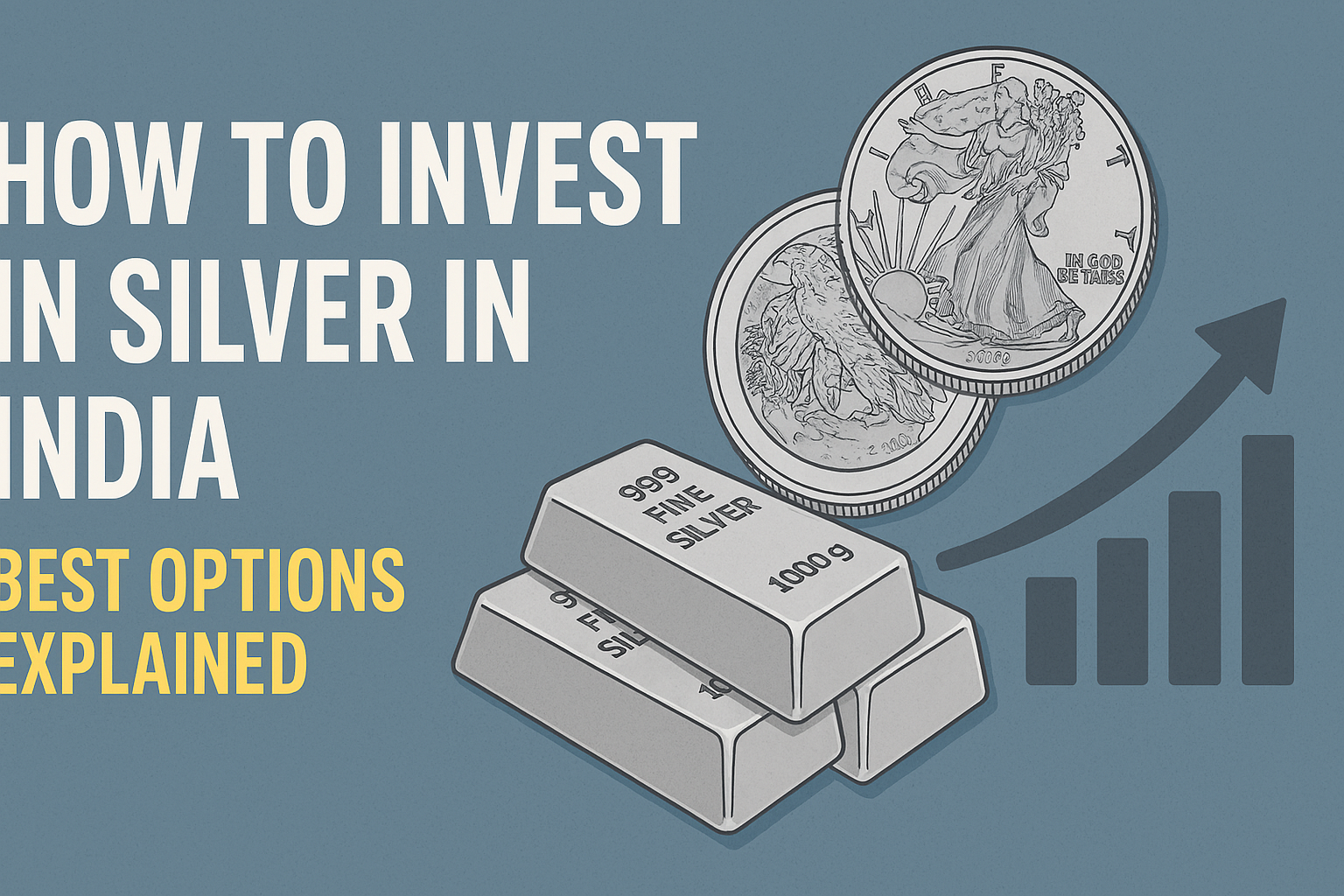
How to Invest in Silver in India: Best Options Explained
Silver is attracting attention again, but the bigger question for Indian investors is not whether silver will rise. The real question is how to invest in silver correctly in India.
Unlike stocks or mutual funds, silver offers multiple ways to invest, and each method behaves very differently in terms of cost, risk, convenience, and taxation. Choosing the wrong format often hurts returns even if the silver price moves in your favour.
Let’s break this down calmly and practically.
Table of Contents
Understanding the Three Main Ways to Invest in Silver in India
Indian investors broadly have three options:
1. Physical silver
2. Silver ETFs
3. Digital silver
Each serves a different purpose. There is no “best” option for everyone.
Physical Silver: The Traditional Choice
Physical silver includes coins, bars, biscuits, or jewellery-grade silver bought from jewellers, bullion dealers, or banks.
For many Indians, physical silver feels reassuring because it is tangible. You can see it, touch it, and hold it. However, this emotional comfort often hides practical challenges.
When you buy physical silver, you usually pay:
Making charges or dealer margins
GST
Storage and security costs
Liquidity is another concern. Selling physical silver quickly at a fair price is not always easy, especially during volatile market conditions. There is also the risk of purity issues if the source is not reliable.
Physical silver suits investors who:
Want long-term holding
Value ownership over convenience
Are comfortable with storage and insurance responsibilities
Silver ETFs: The Most Efficient Route for Most Investors
Silver ETFs allow you to invest in silver without physically owning it. These funds track domestic or international silver prices and are traded on stock exchanges like shares.
This route removes many of the problems associated with physical silver:
No storage or safety concerns
Transparent pricing
Easy buying and selling through a demat account
Silver ETFs are especially suitable for investors who already invest in equities or mutual funds and want silver exposure as part of their portfolio.
However, ETFs are not perfect. Expense ratios, tracking errors, and market liquidity should still be monitored. Also, ETFs are market instruments, so prices can fluctuate sharply in the short term.
For most retail investors, silver ETFs offer the best balance between convenience and efficiency.
Digital Silver: Convenient but Not Risk-Free
Digital silver allows you to buy silver in small quantities online, often starting with just a few rupees. Platforms claim that the silver is stored securely on your behalf and can be sold or converted into physical delivery later.
This method is extremely convenient, especially for beginners. However, digital silver operates in a regulatory grey area. Pricing transparency, storage assurances, and exit mechanisms depend entirely on the platform’s credibility.
Digital silver is better treated as:
A short-term or experimental exposure
A learning tool for beginners
Not a core long-term investment
For serious investors, digital silver should be approached with caution and limited allocation.
Taxation: A Crucial Factor Most Investors Ignore
In India, silver is treated as a capital asset, not a tax-free commodity.
Capital gains taxation applies depending on your holding period. Physical silver, ETFs, and digital silver all fall under capital gains rules, though reporting and compliance can vary.
Ignoring taxation often leads to disappointment when net returns are calculated. Understanding this aspect before investing is essential, especially for long-term holders.
Which Option Is Right for You?
The right choice depends on your objective, not market excitement.
Physical silver works for those who value ownership and are investing for the very long term. Silver ETFs suit investors who want efficiency, liquidity, and easy portfolio integration. Digital silver may work for small, exploratory investments but should not be relied upon for serious wealth building.
Instead of choosing one blindly, think of silver as a supporting asset. Its role is diversification, not dominance.
How Much Silver Should You Hold?
Silver is volatile. This means allocation matters more than timing.
For most investors, silver exposure works best when kept limited and controlled. Overexposure increases emotional stress and portfolio instability, especially during sharp corrections.
Final Thoughts
Silver is not a shortcut to wealth, and the method of investing in silver matters as much as the decision to invest itself. Many investors lose money not because silver falls, but because they choose inefficient formats or enter with unrealistic expectations.
If approached with clarity and discipline, silver can play a valuable supporting role in an Indian investor’s portfolio.
Related Posts:

You may also like

Price to Sales Ratio (P/S): Formula, Meaning & Calculation
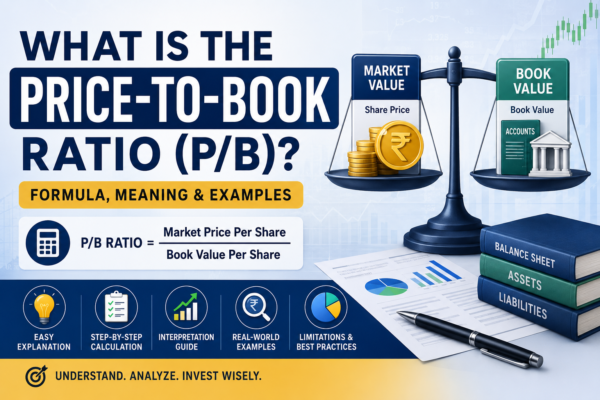
What Is the Price-to-Book Ratio? Formula, Meaning & Examples