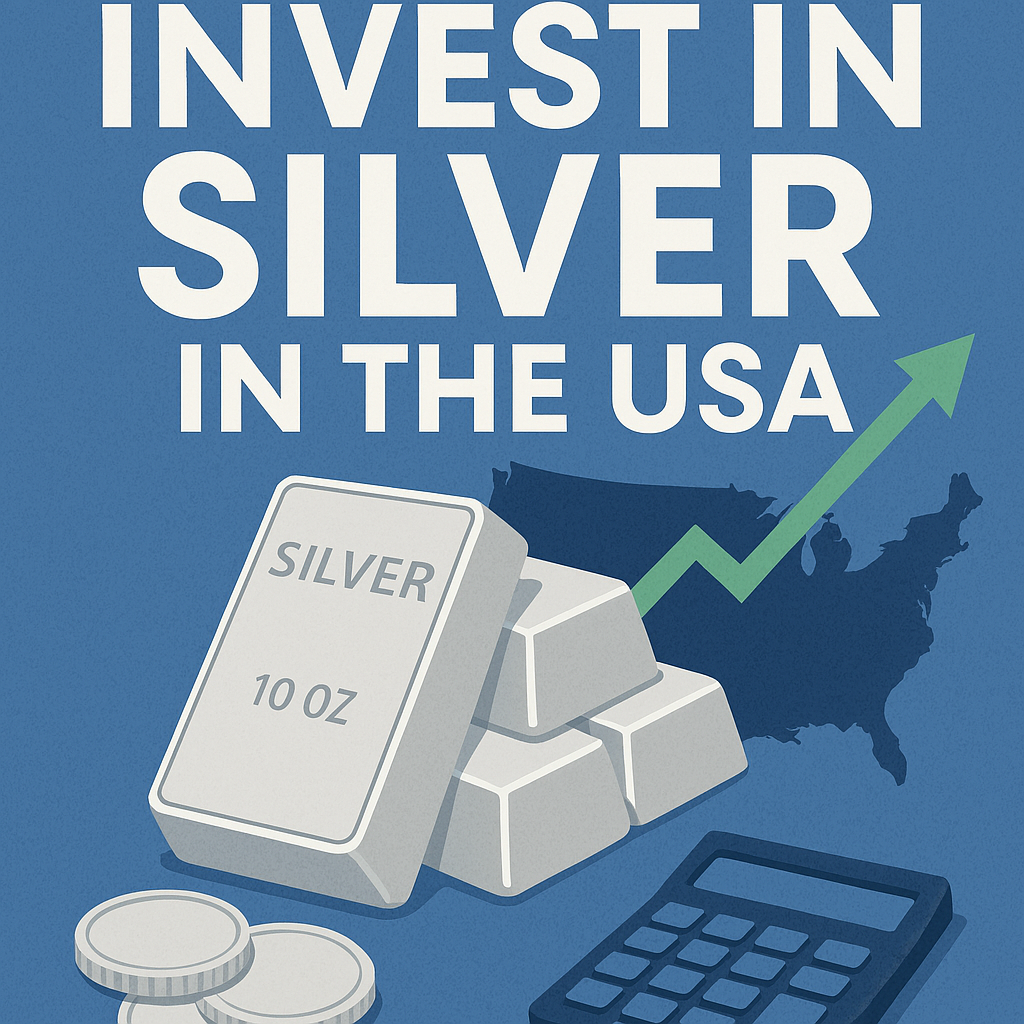
How to Invest in Silver in the USA
Silver attracts investors whenever inflation fears rise, interest rates shift, or global uncertainty increases. In the United States, investing in silver is relatively easy compared to many countries, but the method you choose matters a lot.
Many investors focus only on silver prices and ignore how they invest. That mistake often reduces returns or increases unnecessary risk. Understanding the available options in the US helps you align silver with your long-term financial goals rather than short-term excitement.
Table of Contents
The Main Ways to Invest in Silver in the USA
In the US, silver investment broadly falls into four categories:
Physical silver
Silver ETFs
Silver mining stocks
Futures and derivatives
Each option behaves differently, even though all are linked to the same metal.
Physical Silver: Owning the Metal Directly
Physical silver includes coins and bars purchased from bullion dealers, online marketplaces, or local coin shops. Many American investors prefer this route because it offers direct ownership with no counterparty risk.
However, physical silver comes with hidden frictions. Dealer premiums, storage costs, insurance, and bid-ask spreads reduce efficiency. Liquidity can also be an issue if you need to sell quickly during volatile periods.
Physical silver suits investors who value:
Long-term wealth preservation
Tangible ownership
Independence from financial systems
It is less suitable for frequent buying and selling.
Silver ETFs: The Most Practical Choice for Most Investors
Silver ETFs allow investors to gain exposure to silver prices without owning the metal physically. These funds are traded on US stock exchanges and are backed by physical silver or futures contracts.
For most retail investors, ETFs offer a strong balance between convenience and efficiency. They provide liquidity, transparent pricing, and easy integration into brokerage accounts and retirement portfolios.
However, ETFs are still financial instruments. Expense ratios, tracking error, and market volatility should be understood before investing. ETFs reflect silver prices closely, but they are not the same as holding silver in your hand.
Silver Mining Stocks: Higher Risk, Different Returns
Some investors prefer silver mining stocks instead of silver itself. These stocks can outperform silver during strong bull markets because company profits rise faster than metal prices.
But mining stocks introduce additional risks that have nothing to do with silver prices:
Management decisions
Operational costs
Political and environmental risks
Stock market sentiment
Mining stocks behave more like equities than commodities. They are not a pure silver investment and should be treated as such.
Futures and Options: For Experienced Traders Only
Silver futures and options are available through US commodity exchanges and offer high leverage. While this can amplify gains, it also magnifies losses.
This route is suitable only for experienced traders who understand margin requirements, contract expiry, and risk management. For most investors, futures are unnecessary and potentially harmful to long-term wealth.
Taxation: A Critical Detail in the USA
In the US, silver is classified as a collectible for tax purposes. This is an important distinction that many investors overlook.
Capital gains on silver can be taxed at higher rates than long-term equity investments. ETFs that hold physical silver may also fall under collectible tax treatment. This does not make silver unattractive, but it makes tax awareness essential when calculating real returns.
How Much Silver Should You Hold?
Silver is volatile by nature. It works best as a diversifier, not a core portfolio asset.
Most disciplined investors treat silver as a small allocation that:
Protects against inflation risk
Adds diversification
Balances equity exposure
Over-allocating to silver increases emotional stress and portfolio instability, especially during sharp corrections.
Is This a Good Time to Invest in Silver?
Rather than trying to predict short-term price movements, the smarter question is whether silver fits your long-term financial plan.
Silver can make sense if you:
Understand its volatility
Are investing for diversification, not speculation
Use structured entry methods rather than chasing price
Timing matters less than discipline.
Final Thoughts
Investing in silver in the USA offers flexibility and accessibility, but the method you choose defines your experience. Physical silver provides ownership, ETFs offer efficiency, mining stocks add equity risk, and futures demand expertise.
Silver is not meant to replace stocks or businesses. Used correctly, it strengthens a portfolio. Used emotionally, it creates regret.
The difference lies not in silver’s price, but in your approach.
Related Posts:

You may also like

Price to Sales Ratio (P/S): Formula, Meaning & Calculation
What Is the Price-to-Book Ratio? Formula, Meaning & Examples