Universal Credit Loan Reviews: Rates, Fees & Pros
Universal Credit Loan Reviews: Rates, Fees, Pros and Cons
If you’re looking for a personal loan in the United States, Universal Credit may be worth considering, especially if you want to consolidate high-interest debt or need access to funds relatively quickly. The company offers fixed-rate personal loans, an online application process, and options for sending debt-consolidation funds directly to existing creditors.
However, Universal Credit loans also come with an important drawback: origination fees of 5.25% to 9.99% and APRs that can reach 35.99%. These costs can make borrowing expensive, particularly for applicants who receive higher-rate offers.
In this Universal Credit loan review, we’ll examine its interest rates, fees, eligibility requirements, customer reviews, advantages, disadvantages, and alternatives to help you decide whether it is a good fit.
Table of Contents
Is Universal Credit a Good Personal Loan Lender?
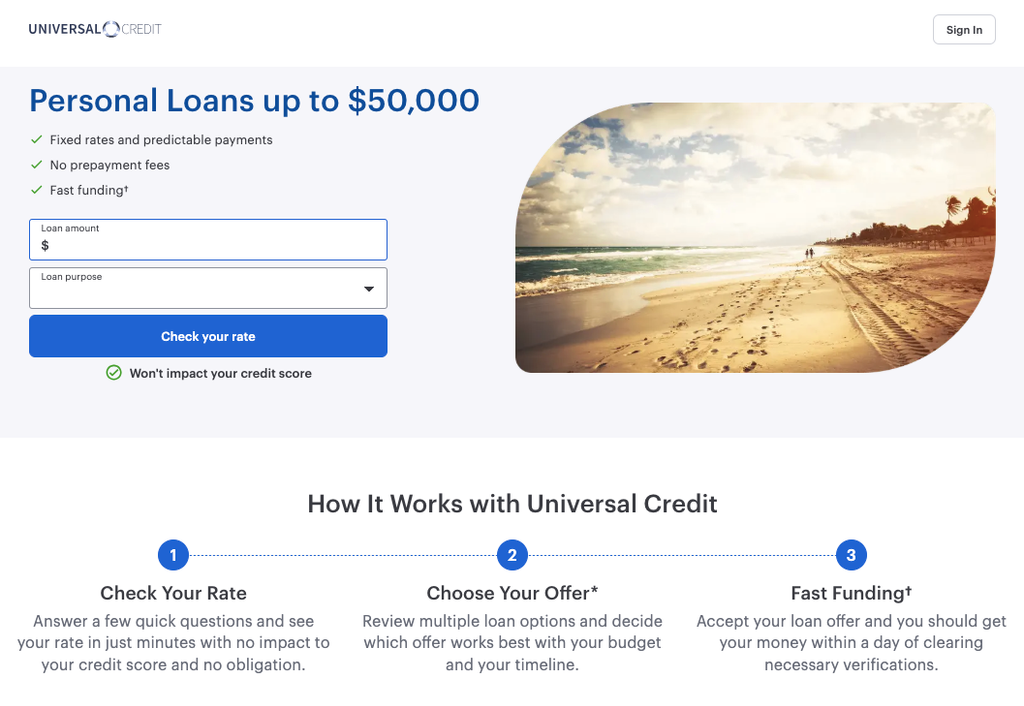
Universal Credit is a legitimate U.S. personal loan provider associated with Upgrade, Inc. Its loans are made through bank partners. It may be worth comparing if you have fair credit, want to consolidate debt, or value a straightforward online application.
However, it isn’t necessarily the cheapest option. Borrowers with good or excellent credit may find lenders with lower APRs or smaller origination fees.
| Feature | Universal Credit |
|---|---|
| Loan amounts | $1,000–$50,000 |
| Advertised APR | 11.69%–35.99% |
| Repayment terms | 36–60 months |
| Origination fee | 5.25%–9.99% |
| Prepayment penalty | None |
| Rate-check credit inquiry | Soft inquiry |
| Funding | Potentially within one business day after required verifications |
| Best for | Borrowers comparing debt-consolidation loans and fast funding |
Terms verified against the lender’s published information in October 2026. Rates, fees, and eligibility requirements can change, and not every offer is available in every state.
What Is Universal Credit?
Universal Credit is an online personal loan platform associated with Upgrade, Inc. It connects eligible borrowers with personal loan offers made by its bank partners.
Despite its name, this company is not the UK’s Universal Credit government benefits program. This review covers the U.S. personal loan product.
Universal Credit offers unsecured personal loans, meaning you generally do not need to pledge a car or home as collateral. Borrowers repay the loan in installments under the agreed terms.
Depending on your offer and eligibility, loan proceeds may be available for expenses such as:
- Debt consolidation.
- Credit card refinancing.
- Home improvement projects.
- Emergency expenses.
- Moving costs and other major purchases.
Restrictions apply to certain uses, including college tuition, investing, gambling, and illegal activities. Review the current loan agreement before applying.
Universal Credit Loan Rates and Fees
Interest rates and fees are among the most important factors to consider when evaluating Universal Credit.
1. APR: 11.69% to 35.99%
Universal Credit advertises APRs ranging from 11.69% to 35.99%. Your actual APR depends on factors such as your credit profile, credit usage history, loan amount, and other underwriting criteria.
The lowest advertised rate is not guaranteed. Universal Credit also states that the lowest rates require autopay and paying off a portion of existing debt directly.
APR, or annual percentage rate, is a useful comparison measure because it reflects the borrowing cost, including applicable fees, rather than just the interest rate.
If you qualify for a high APR, compare other lenders before accepting the offer.
2. Origination Fee: 5.25% to 9.99%
Universal Credit charges an upfront origination fee, which is deducted from the loan proceeds.
For example, suppose you borrow $10,000 and receive a 7% origination fee.
| Item | Amount |
|---|---|
| Loan amount | $10,000 |
| Origination fee | $700 |
| Money you receive | $9,300 |
You would owe repayments based on the loan’s contractual terms even though you receive only $9,300 upfront.
This is a significant consideration if you need a specific amount of money. You should compare the net amount deposited into your account with the total amount you will repay.
3. Repayment Terms: 36 to 60 Months
Universal Credit’s standard published terms range from three to five years.
A longer repayment period can reduce your monthly payment, but it may increase the total interest you pay. A shorter term can cost less overall, although the monthly payments may be higher.
Choose a payment that fits your budget without leaving you struggling to cover essential expenses.
4. No Prepayment Penalty
Universal Credit says borrowers can pay off their loans early without a prepayment penalty.
This can be useful if your financial circumstances improve and you want to reduce your outstanding debt. Before making additional payments, confirm how they will be applied to your loan balance.
See the official Universal Credit FAQ for current terms.
How Much Does a Universal Credit Loan Cost?
Consider the lender’s published example of a $10,000 loan with a 36-month term, a 22.99% annual interest rate, and a 7% origination fee.
According to Universal Credit:
- Loan amount: $10,000.
- Origination fee: $700.
- Amount received: $9,300.
- APR: 28.47%.
- Monthly payment: approximately $387.05.
- Total of scheduled payments: approximately $13,933.62.
This means the borrower receives $9,300 but makes scheduled payments totaling about $13,934 over three years. The difference reflects the cost of borrowing under that example’s terms.
This is an illustration published by the lender, not a guaranteed offer. Your APR, fee, monthly payment, and total cost may differ.
My recommendation: Don’t evaluate a personal loan by its monthly payment alone. Compare the APR, origination fee, net amount you receive, and total repayment amount across multiple offers.
Universal Credit Loan Requirements
Universal Credit’s eligibility requirements depend on its current underwriting rules and your application details.
Recent independent reviews report a minimum credit score requirement around 560, although the score alone does not guarantee approval. The lender also considers other information about the applicant.
Applicants generally need to:
- Meet the lender’s age and residency requirements.
- Provide a valid Social Security number and contact information.
- Have a U.S. bank account.
- Supply income and financial information as requested.
- Complete identity and other required verifications.
Universal Credit may request supporting documents such as pay stubs, bank statements, or identification.
If your credit score is low, you may still be able to prequalify, but you could receive a higher APR or a smaller loan amount. A lender’s minimum credit score is not a promise that every applicant above that score will qualify.
Does Checking Your Universal Credit Rate Affect Your Credit Score?
Universal Credit states that checking your rate uses a soft credit inquiry, which does not affect your credit score.
If you proceed with a formal application and accept an offer, a hard credit inquiry may occur and temporarily affect your score.
This makes prequalification useful for comparing potential offers before committing to a loan. However, prequalification does not guarantee final approval, the advertised rate, or the amount you will receive.
You can start with the lender’s official website.
How Fast Can Universal Credit Fund a Loan?
Universal Credit advertises funding within one business day after the required verifications are cleared.
However, the time it takes for money to become available can depend on your application, verification requirements, and your bank’s transaction processing. When funds are sent directly to other creditors, the process may take longer.
If you need money for an urgent expense, confirm the expected timeline before accepting the loan. Don’t assume that approval automatically means the money will be available that day.
Universal Credit Customer Reviews: What Do Borrowers Say?
Customer reviews can help you understand how borrowers experience the application process, loan costs, and customer service. However, online reviews are self-selected and may not represent the experience of every customer.
Independent reviews from LendingTree and NerdWallet highlight several aspects of Universal Credit’s offering.
Commonly Reported Advantages
Convenient online application: Borrowers can check potential offers online rather than visiting a physical branch.
Debt-consolidation features: Eligible borrowers may be able to have loan proceeds sent directly to existing creditors, which can simplify the payoff process.
Potentially fast funding: The lender advertises funding after required verifications are complete, potentially within one business day.
Prequalification: Checking an initial rate through a soft inquiry allows borrowers to explore options without immediately affecting their credit score.
Common Concerns
Origination fees: The 5.25%–9.99% fee can substantially reduce the amount deposited into your account.
High APRs: Borrowers who receive offers near the upper end of the advertised range may face expensive repayments.
Different offers for different borrowers: Rates, amounts, and approval decisions depend on individual circumstances. Another applicant’s experience does not predict your own offer.
Universal Credit Loan Pros and Cons
| Pros | Cons |
|---|---|
| Online application process | Origination fee of 5.25%–9.99% |
| Fixed-rate loans with predictable scheduled payments | APR can reach 35.99% |
| Prequalification with a soft credit inquiry | Final approval and terms are not guaranteed |
| Potentially fast funding | Funding can be delayed by verification or bank processing |
| No prepayment penalty | Other lenders may offer lower costs |
| Direct payment to creditors may be available for debt consolidation | Standard repayment terms are 36–60 months |
Overall, Universal Credit may be useful for some borrowers, but its fees mean that comparing alternatives is especially important.
Universal Credit vs. Other Personal Loan Lenders
Before choosing Universal Credit, compare it with other lenders that offer personal loans to U.S. borrowers.
| Lender | Loan amount | Advertised APR range | Potential advantage |
|---|---|---|---|
| Universal Credit | $1,000–$50,000 | 11.69%–35.99% | Debt-consolidation features |
| Upgrade | $1,000–$50,000 | 7.74%–35.99% | Broader repayment-term options |
| Upstart | $1,000–$75,000 | 6.30%–35.99% | Alternative underwriting criteria |
Ranges are based on recent independent comparison data and can change. APRs, fees, and terms depend on the applicant and offer. These figures are not a guarantee that one lender will be cheaper for you.
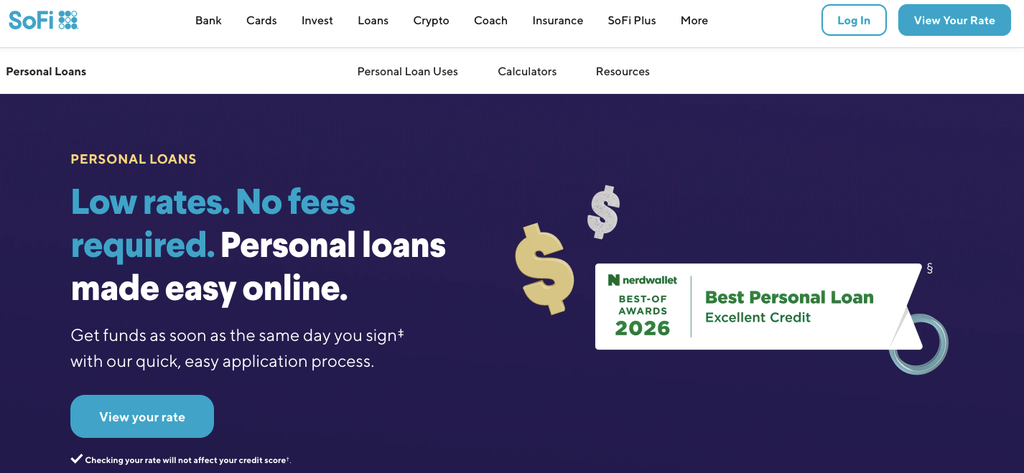
You can also compare offers from SoFi and LendingClub.

When comparing lenders, focus on:
- The APR offered to you.
- Any origination or other fees.
- The actual amount you will receive.
- The monthly payment and total repayment cost.
- The repayment term and early-payment rules.
A lower advertised starting APR is useful, but your personalized offer is what matters.
Is Universal Credit Good for Debt Consolidation?
Universal Credit may be worth considering for debt consolidation if you have multiple high-interest debts and qualify for a personal loan with a lower overall borrowing cost.
A debt-consolidation loan can combine several balances into one scheduled payment. If eligible, you may also be able to have the lender pay certain creditors directly.
However, consolidation is not automatically a money-saving strategy.
Before accepting an offer, compare the loan’s APR and fees with the interest costs on your existing debts. Also consider whether a longer repayment period could increase your total cost.
Avoid running up new credit card balances after consolidating old ones. Otherwise, you could end up with both the new loan and additional credit card debt.
If the loan does not reduce your total borrowing cost or fit your budget, consider alternatives such as negotiating with creditors, exploring a nonprofit credit counseling service, or adjusting your repayment plan.
How to Apply for a Universal Credit Loan
If you decide to explore an offer, the general process is:
- Visit the official Universal Credit website.
- Enter the requested information to check your potential rate.
- Review available loan amounts, APRs, fees, repayment terms, and estimated monthly payments.
- Compare the offer with other lenders.
- If you choose to proceed, complete the formal application and provide any requested documents.
- Read the final loan agreement carefully before accepting.
Make sure the net amount you receive will cover your intended expense after the origination fee is deducted.
Frequently Asked Questions
Is Universal Credit a legitimate lender?
Universal Credit is a legitimate U.S. personal loan platform associated with Upgrade, Inc. Its loans are made through bank partners. Review the official disclosures and your final loan agreement before accepting an offer.
What credit score do you need for Universal Credit?
Recent independent reviews report a minimum credit score around 560. However, meeting a reported minimum does not guarantee approval or a favorable rate. The lender considers other aspects of your financial profile.
Does Universal Credit charge an origination fee?
Yes. Its published origination fee ranges from 5.25% to 9.99% and is deducted from the loan proceeds.
Can you pay off a Universal Credit loan early?
Yes. Universal Credit says it does not charge a prepayment penalty. Confirm the payoff amount and how additional payments are applied before making an early payment.
How long does Universal Credit take to deposit funds?
The lender advertises sending funds within one business day after required verifications are cleared. Actual availability depends on verification and bank processing; direct payments to creditors may take longer.
Is Universal Credit good for borrowers with bad credit?
It may be worth comparing if your credit is less than perfect, but a higher APR and origination fee can make the loan expensive. Prequalify where possible and compare multiple personalized offers before deciding.
Final Verdict: Should You Choose Universal Credit?
Universal Credit may be a reasonable option for U.S. borrowers who want an online personal loan, particularly for debt consolidation or when fast funding is important. Its prequalification process, fixed-rate structure, and lack of a prepayment penalty are useful features.
However, the origination fee is a significant drawback, and borrowers offered high APRs may pay substantially more than they expect.
My verdict: Consider Universal Credit, but don’t accept an offer until you’ve compared it with at least two or three alternatives. Look beyond the monthly payment and compare the APR, fee, amount deposited into your account, and total repayment cost.
The best personal loan is the one you can comfortably repay at a competitive total cost—not simply the one that approves your application fastest.
Disclaimer: This article is for educational purposes only and is not individualized financial advice. Loan terms and availability can change; verify current details directly with the lender before applying.

You may also like
What Is a Savings Bond? Types, Interest & How It Works
What Is a Joint Account? Benefits, Risks & How It Works