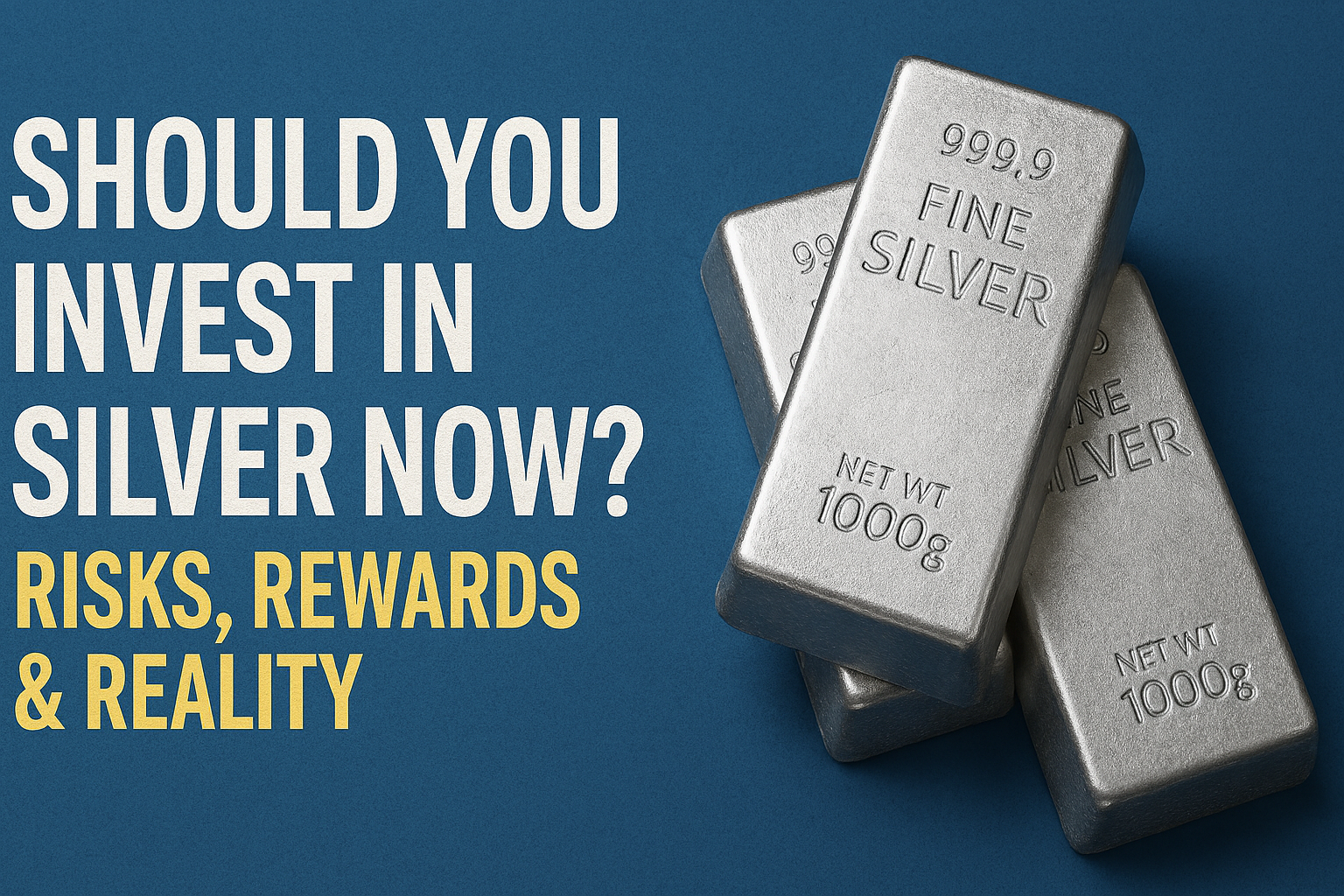
Should You Invest in Silver Now? Risks, Rewards & Reality
Whenever silver starts moving sharply, the same question appears in every investor’s mind: should I invest in silver now, or have I already missed the opportunity? This is a reasonable question, especially because silver is known for both powerful rallies and sudden corrections.
The correct way to approach this question is not by predicting tomorrow’s price, but by understanding who silver is suitable for, what role it can play in a portfolio, and what risks come with it.
Table of Contents
Understanding Where Silver Is in Its Cycle
Silver moves in cycles. Long periods of consolidation are usually followed by relatively short but intense uptrends. At the moment, silver appears to be in the early-to-middle phase of a broader uptrend, supported by industrial demand, supply constraints, and global macro conditions.
This does not mean prices will keep rising every day. It means the larger trend remains positive, even though short-term pullbacks are normal and expected.
Who Should Consider Investing in Silver
Silver is not suitable for every type of investor. Its volatility makes it uncomfortable for people who expect steady, low-fluctuation returns.
Silver may make sense if:
- You have a long-term investment horizon
- You can tolerate price swings without panic
- You want diversification beyond equities and mutual funds
- You understand that silver is a supporting asset, not a core holding
Silver is usually best viewed as a portfolio diversifier, not a replacement for stocks, businesses, or long-term equity investments.
Key Risks You Must Understand Before Investing
The biggest mistake investors make with silver is underestimating its volatility. Silver often moves faster than gold, both on the upside and the downside.
Some important realities:
- Sharp corrections can happen without warning
- News headlines often exaggerate moves
- Emotional buying near peaks leads to regret
- Leverage magnifies losses quickly
Understanding these risks in advance helps you avoid making decisions driven by fear or greed.
Is This the Right Time to Enter?
Rather than asking whether this is the “perfect” time, a better question is how to enter responsibly.
For long-term investors, staggered investing helps reduce timing risk. For traders, patience is essential, as chasing price during strong momentum phases increases the probability of drawdowns.
No asset is safe at any price. Silver becomes attractive when bought with discipline, not excitement.
How Much Exposure Is Reasonable?
Silver generally works best as a small allocation within a diversified portfolio. Its role is to balance risk, not dominate returns.
A controlled exposure allows you to benefit from silver’s upside while protecting your overall financial stability if prices correct.
Silver Versus Other Investment Choices
Many investors compare silver with equities, mutual funds, or gold. Each asset plays a different role. Silver offers:
- Higher volatility than gold
- More industrial demand exposure
- Potential for faster price movement
- Less stability than equity businesses
This makes silver unsuitable as a standalone strategy, but valuable as part of a broader plan.
The Psychological Side of Investing in Silver
Silver tests investor psychology more than most assets. It rewards patience during consolidation and punishes impulsive decisions during rallies.
The most successful silver investors are not those who buy at the lowest price, but those who manage risk well and stay emotionally neutral.
Final Verdict: Should You Invest in Silver Now?
Silver can be a sensible investment if you understand its role and respect its nature. It is not a shortcut to wealth, and it is not a replacement for disciplined investing.
If you are looking to diversify, protect purchasing power, and participate in long-term global trends, silver deserves consideration. If you are looking for quick profits without volatility, silver is not the right tool.
Closing Thoughts
Investing is not about chasing what is rising today. It is about building a portfolio that can survive different market environments. Silver, when used wisely, can strengthen that structure — but only when approached with education and restraint.
Related Posts:

You may also like
What Makes Stock Prices Go Up or Down? Simple Guide
Bull Market vs Bear Market: Meaning, Differences & Examples