IRS Transcript: How to Get One Online, by Mail, or by Phone
IRS Transcript: How to Get One Online, by Mail, or by Phone
If you need to verify your income, apply for a mortgage, prepare a previous year’s tax return, or check information the IRS has on file, you may need an IRS transcript. Fortunately, the Internal Revenue Service offers several ways to request tax records, and most transcripts are available for free.
An IRS transcript is a summary of specific tax information from your IRS records. Depending on the type you request, it may show information from your original tax return, payments and adjustments, or income reported by employers and financial institutions.
However, an IRS transcript is not always the same as a complete copy of your tax return. Choosing the right document can save time, especially when a lender, government agency, or tax professional requests specific records.
In this guide, you’ll learn what an IRS transcript is, which type you may need, how to get one online or by mail, how much it costs, and what to do if your transcript is missing.
Table of Contents
What Is an IRS Transcript?
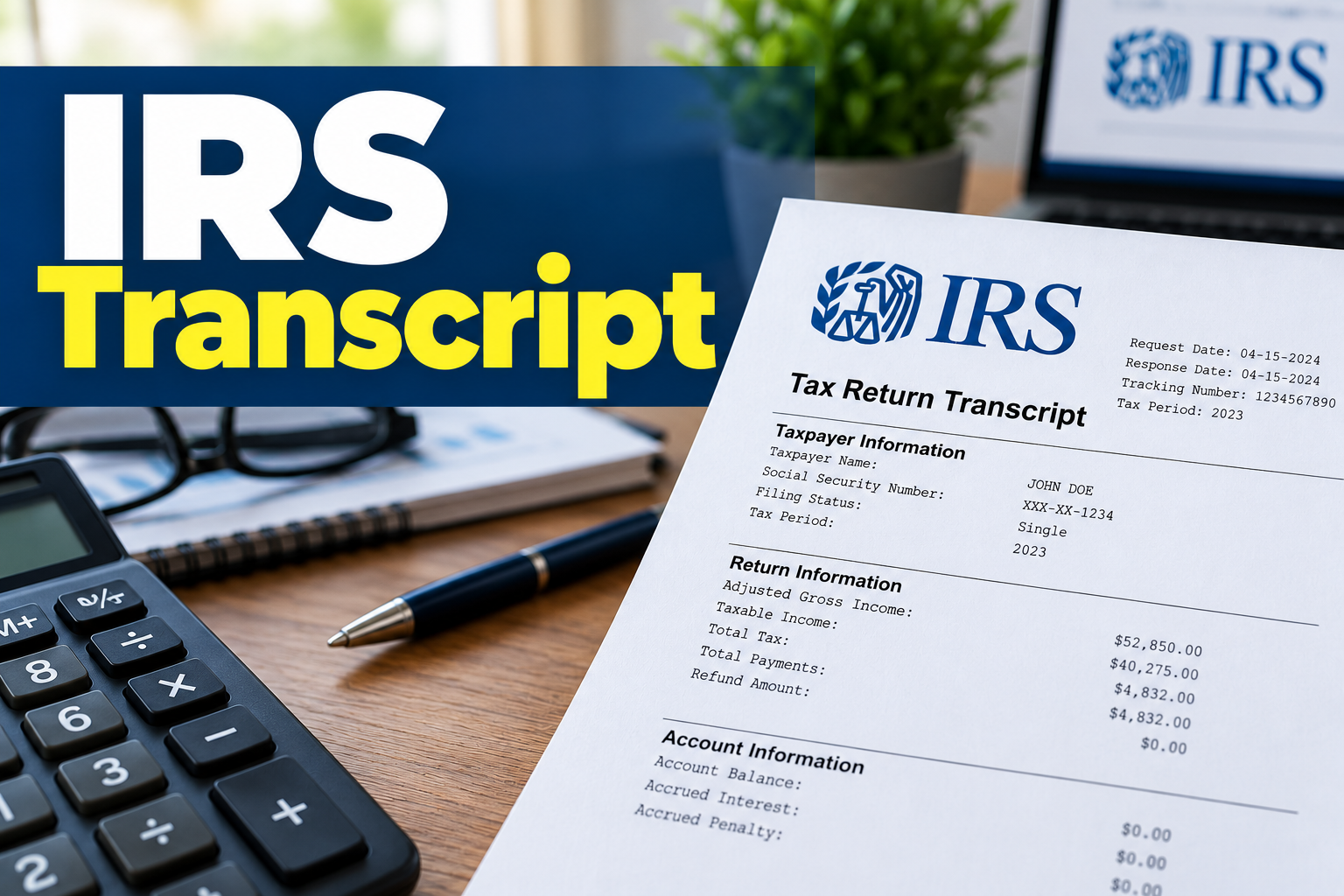
An IRS transcript is a document that summarizes selected information from your federal tax records. The IRS provides different transcript types for different purposes.
For example, a mortgage lender may request a tax return transcript to help verify income information. Someone preparing a previous year’s tax return may need a wage and income transcript containing information reported on forms such as W-2s and 1099s.
Depending on the type, a transcript may contain:
- Filing status and certain income figures.
- Adjusted gross income and taxable income.
- Payments, credits, and account adjustments.
- Information reported by employers, banks, and other payers.
- Details about the processing of a tax return.
You generally do not need to pay for an IRS transcript. The IRS also offers online access for eligible taxpayers.
Visit the official IRS transcript page to see your options.
What Are the Different Types of IRS Transcripts?
The IRS provides several types of tax records. The right choice depends on why you need the document.
| Transcript type | What it shows | Common use |
|---|---|---|
| Tax Return Transcript | Most line items from the original return as filed, generally including certain forms and schedules | Reviewing a previous return or satisfying certain verification requests |
| Tax Account Transcript | Account activity, payments, adjustments, and other account information | Checking tax-account activity or adjustments |
| Record of Account Transcript | Combines information from a tax return transcript and a tax account transcript | Reviewing return information alongside account activity |
| Wage and Income Transcript | Information reported to the IRS on documents such as W-2s, 1099s, and certain other information returns | Reconstructing income records or preparing a prior-year return |
| Verification of Non-Filing Letter | Indicates that the IRS has no record of a processed Form 1040-series return for the relevant period as of the request date | Providing evidence of non-filing when an organization requires it |
A Verification of Non-Filing Letter does not establish whether you were legally required to file a tax return. It only reports the IRS’s record status.
You can find detailed descriptions on the IRS transcript types page.
How to Get an IRS Transcript Online
For most eligible taxpayers, requesting a transcript online is the quickest option when the required record is available.
Step 1: Visit the official IRS website
Go to the IRS’s Get Your Tax Records and Transcripts page.
Use the official IRS website rather than an unfamiliar third-party site that asks for your Social Security number or other sensitive information.
Step 2: Access your IRS Individual Online Account
Follow the instructions to sign in to your IRS Individual Online Account. You may need to complete identity verification through the IRS’s linked sign-in process.
If you cannot access your account, review the available account recovery and alternative request options.
Step 3: Choose the transcript you need
Locate the tax-records or transcript section and select the appropriate tax year and document type.
For example:
- Choose a tax return transcript if you need a summary of your original filed return.
- Choose a tax account transcript if you need to review payments or adjustments.
- Choose a wage and income transcript if you need information reported on W-2s or 1099s.
- Request a Verification of Non-Filing Letter if an organization specifically requires it.
If a lender or another organization has requested the document, ask which transcript type it accepts before making your request.
Step 4: View or download your transcript
Follow the on-screen instructions to access the available record. Depending on the service and document, you may be able to view, download, or print it.
Store the document securely because tax transcripts contain sensitive financial information.
Important: Not every transcript is immediately available for every tax year. Availability can depend on whether a return has been processed and whether the relevant information has been reported to the IRS.
How to Get an IRS Transcript by Mail
If you cannot access your online account or prefer a paper document, you may be able to request a transcript by mail.
- Visit the IRS transcript request page.
- Select the Get Transcript by Mail option, if available for your request.
- Follow the instructions and provide the required identifying information.
- Confirm that the mailing address matches the IRS records required for the request.
- Allow time for processing and delivery.
The IRS generally states that mailed transcripts take approximately 5–10 calendar days to arrive, although timing can vary.
If your address has changed, you may need to update your IRS records or follow additional instructions before the transcript can be delivered.
How to Get an IRS Transcript by Phone
The IRS also offers an automated phone option for certain transcript requests.
IRS Get Transcript by Mail phone number: 800-908-9946
Call and follow the automated prompts to determine whether the transcript you need can be requested by phone.
Phone availability and the records you can request may vary. If the automated service cannot fulfill your request, use the official IRS website to review other options.
For more complex tax-account questions, you may need to contact the IRS through its appropriate taxpayer assistance channel.
How Much Does an IRS Transcript Cost?
IRS transcripts are generally free.
You should not need to pay a private company simply to obtain a standard transcript that the IRS provides directly. Be cautious of websites that imitate official government services or charge unnecessary fees.
However, a transcript is different from a complete copy of a filed tax return.
If you need an actual copy of your original return, including the relevant attachments, the IRS may require a separate request using Form 4506. A fee may apply, and processing can take longer.
Review the IRS’s Tax Topic 156 for details about requesting transcripts and copies of tax returns.
IRS Transcript vs. Tax Return Copy
Although the terms are sometimes used interchangeably, a transcript and a complete tax return copy are different documents.
| Feature | IRS transcript | Complete tax return copy |
|---|---|---|
| Information | Summary or selected tax records, depending on type | Copy of the filed return and included attachments |
| Cost | Generally free | A fee may apply |
| Request process | Online or other available transcript methods | Generally requested using Form 4506 |
| Best for | Verifying tax information or reviewing account activity | Situations that specifically require the original filed return |
Before requesting either document, confirm exactly what the organization needs. A lender may accept a transcript for one purpose but require other documentation for another.
How Long Does It Take to Get an IRS Transcript?
The time depends on how you request the transcript and whether the IRS has the relevant information available.
- Online: Usually the quickest option when the record is available through your account.
- By mail: Generally around 5–10 calendar days, according to IRS guidance, although delays can occur.
- By phone: Depends on the available automated service and the delivery method offered for your request.
Recently filed returns may not be available immediately. Wage and income information can also take time to appear because employers and other payers must submit the relevant information.
If you need a transcript for a mortgage closing, financial aid deadline, or another time-sensitive purpose, request it early and ask the receiving organization whether it accepts an alternative document.
How to Read an IRS Transcript
An IRS transcript can contain tax figures, dates, account entries, and transaction codes. The exact information depends on the transcript type.
Here are some items you may encounter:
- Tax period: The year or period covered by the record.
- Filing status: The status recorded on the tax return, when applicable.
- Adjusted gross income: Income after certain adjustments, as reported or reflected in the relevant record.
- Payments and credits: Amounts credited to the tax account.
- Adjustments: Entries reflecting certain changes to the account.
- Transaction codes: Codes used to identify specific IRS account actions.
Do not assume that a single transaction code guarantees a refund date, indicates an audit, or proves that a tax issue has been resolved. Interpret codes alongside their descriptions, dates, and amounts.
If you are unsure what an entry means, consult the IRS transcript FAQs or seek help from a qualified tax professional.
What to Do If Your IRS Transcript Is Missing or Incorrect
If you cannot find the transcript you need, or the information appears wrong, try the following steps.
1. Check the tax year and transcript type
Make sure you selected the correct year and document. A tax return transcript and a tax account transcript do not show exactly the same information.
2. Check whether your return has been processed
If you recently filed a return, the IRS may not have finished processing it. Wait for the relevant record to become available and check again.
3. Consider amended returns or account adjustments
An amended return or later IRS adjustment may affect what appears on different transcripts. Review the record carefully before concluding that the IRS has made an error.
4. Confirm your identity and address details
If you requested a mailed transcript, verify that you followed the required identity and address instructions.
5. Contact the IRS if necessary
If information remains missing or incorrect, use the official IRS contact options or seek assistance from a qualified tax professional. If you suspect identity theft, follow the IRS’s official identity-theft guidance rather than relying on an unfamiliar website.
Frequently Asked Questions About IRS Transcripts
How do I get my IRS transcript online?
Visit the IRS Get Your Tax Records and Transcripts page, access your online account, and select the available transcript type and tax year.
Is an IRS transcript free?
Yes. Standard IRS transcripts are generally free. A complete copy of a filed tax return is a separate request and may involve a fee.
Can I get an IRS transcript without an online account?
In many cases, yes. The IRS offers alternative methods, including mail and an automated phone service for certain requests. Review the current options on the official IRS website.
Which IRS transcript do I need for a mortgage?
The lender determines which documents it accepts. A tax return transcript is commonly used for tax-information verification, but requirements vary. Ask your lender before requesting a document.
Can I use a wage and income transcript to file my taxes?
A wage and income transcript may help you identify information reported to the IRS on forms such as W-2s and 1099s. However, it may not include every document or all the information you need to prepare a complete return.
What does “no record of return filed” mean?
It generally indicates that the IRS does not currently show a processed return for the relevant period in the record being viewed. It does not, by itself, determine whether you were required to file or explain every possible reason for the missing record.
Can an IRS transcript tell me when my refund will arrive?
A transcript may show account activity, but it should not be treated as a guaranteed refund date. Use the IRS’s official Where’s My Refund? tool to check refund status.
Final Thoughts
An IRS transcript can help you verify tax information, review account activity, prepare an older return, or provide records requested by a lender or another organization.
The most important step is choosing the correct transcript. Use a tax return transcript for information from the original return, a tax account transcript for account activity, and a wage and income transcript for information reported by employers and other payers.
Start with the official IRS website, request the document early if you have a deadline, and protect your tax records once you receive them. If you need a complete copy of a filed return rather than a transcript, check the separate IRS request process.
Disclaimer: This article is for educational purposes only and is not individualized tax, financial, or legal advice. Transcript availability, procedures, and processing times may change. Confirm current details directly with the IRS.

You may also like

Where’s My Amended Return? Check IRS Status & Refund

What Is a W-9? Who Needs It and How to Fill It Out